Hmmm, where to start with the Vanderbilts? The first one was Cornelius. He was born to dirt-poor dirt farmers on Staten Island. When he was 16, he acquired a little sailboat and started a shipping company. One thing led to another and he became wealthy, holding around 5% of the US currency at the time. This made him the sole success story arising from Staten Island.
Surprisingly for a wealthy person, he was mean and excelled at cheating his business partners and abusing his family. In these endeavors, he was aided by the spiritual mediums he consulted regularly.
When he died (finally!) he disinherited his daughters and gave the rest to his son, William.
William liked trains and bought many of them, along with the railroads that ran them. Nicer than his father, he endowed Vanderbilt University (which remains in existence to this very day!), New York’s Metropolitan Opera and the YMCA.
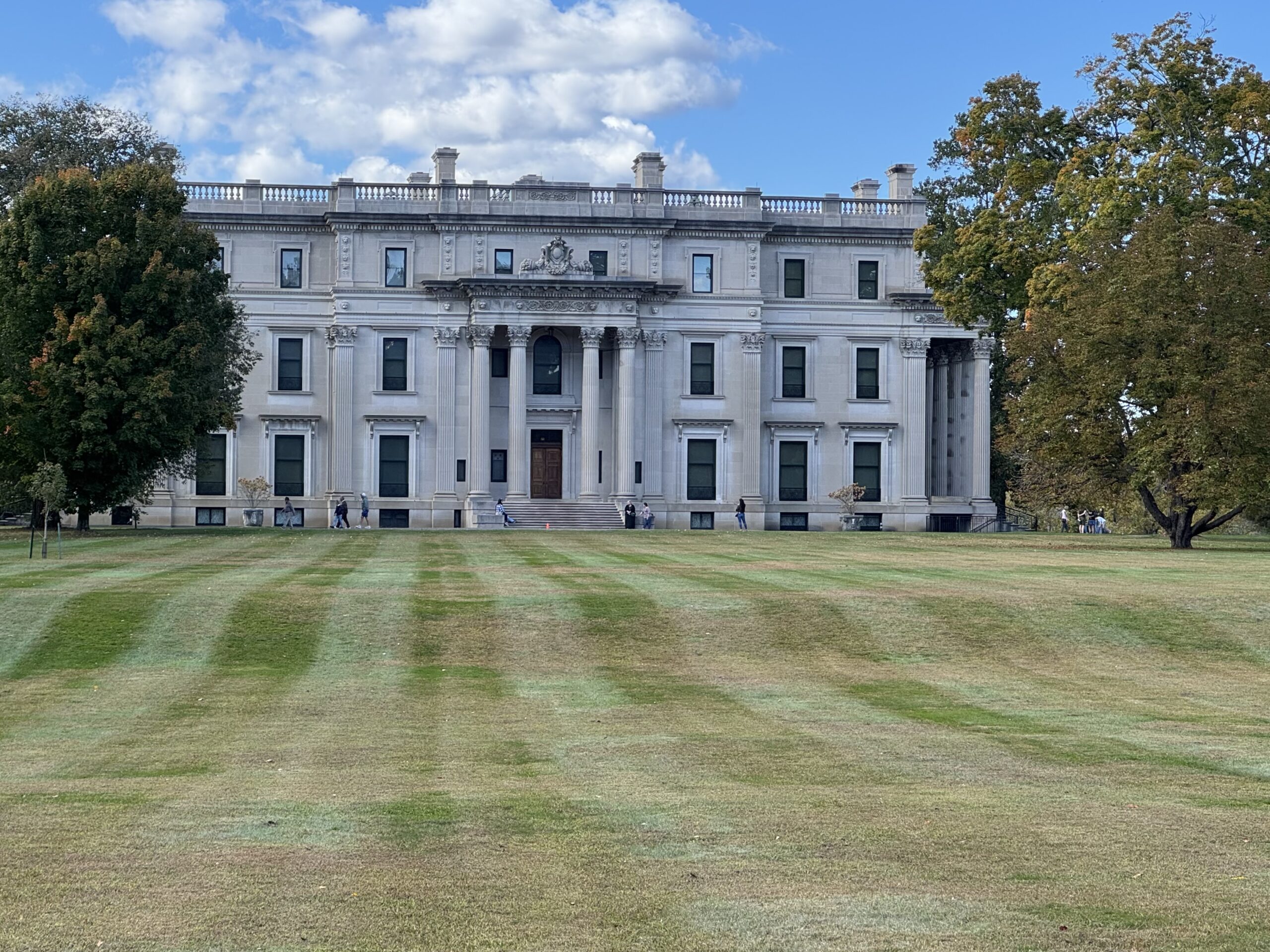
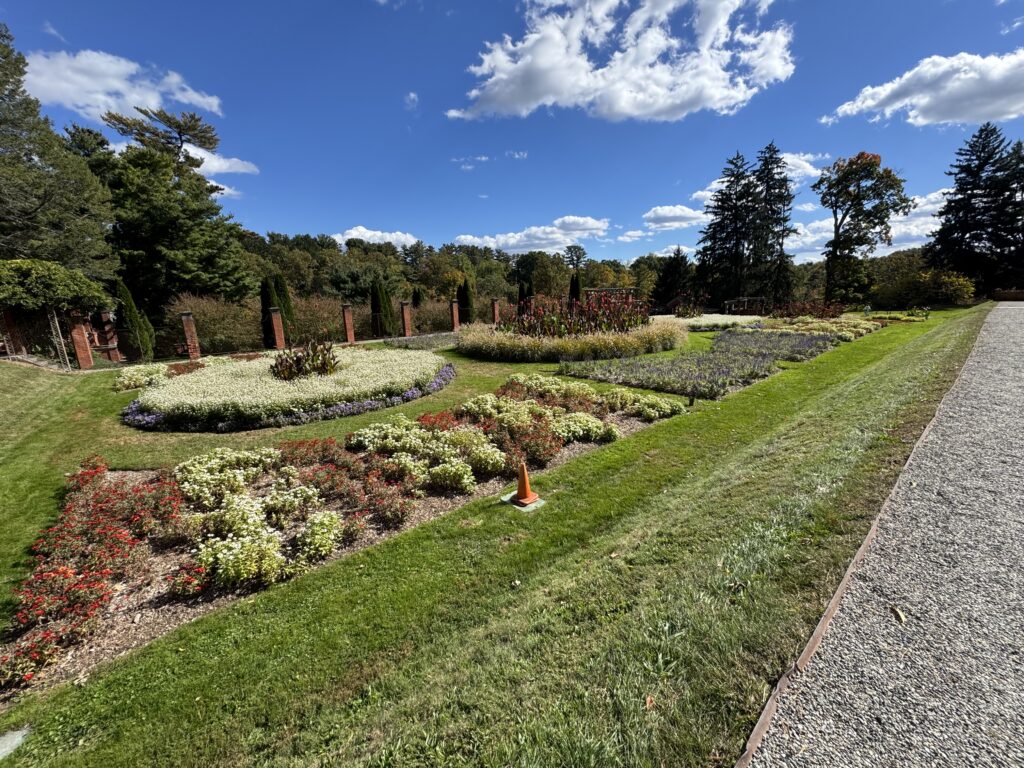
William had children, among them was Frederick, who inherited a ton of money. He toiled in the family business and also liked gardening, so he bought 600 acres in Hyde Park. Which finally brings us to the cottage. Whew!
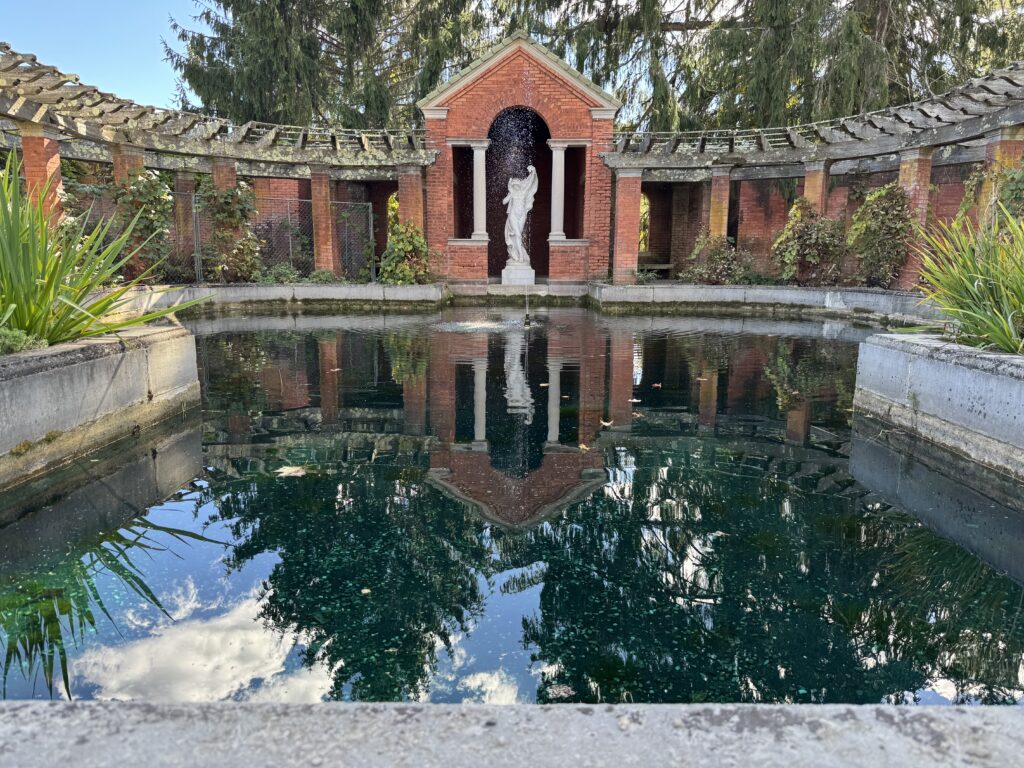
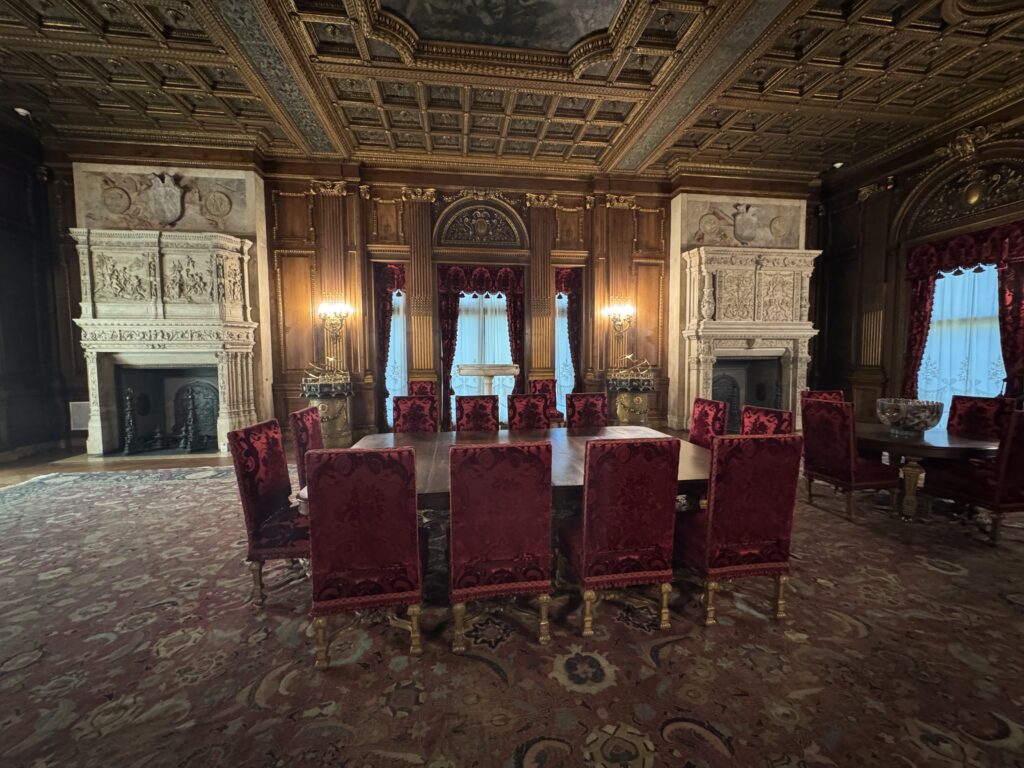
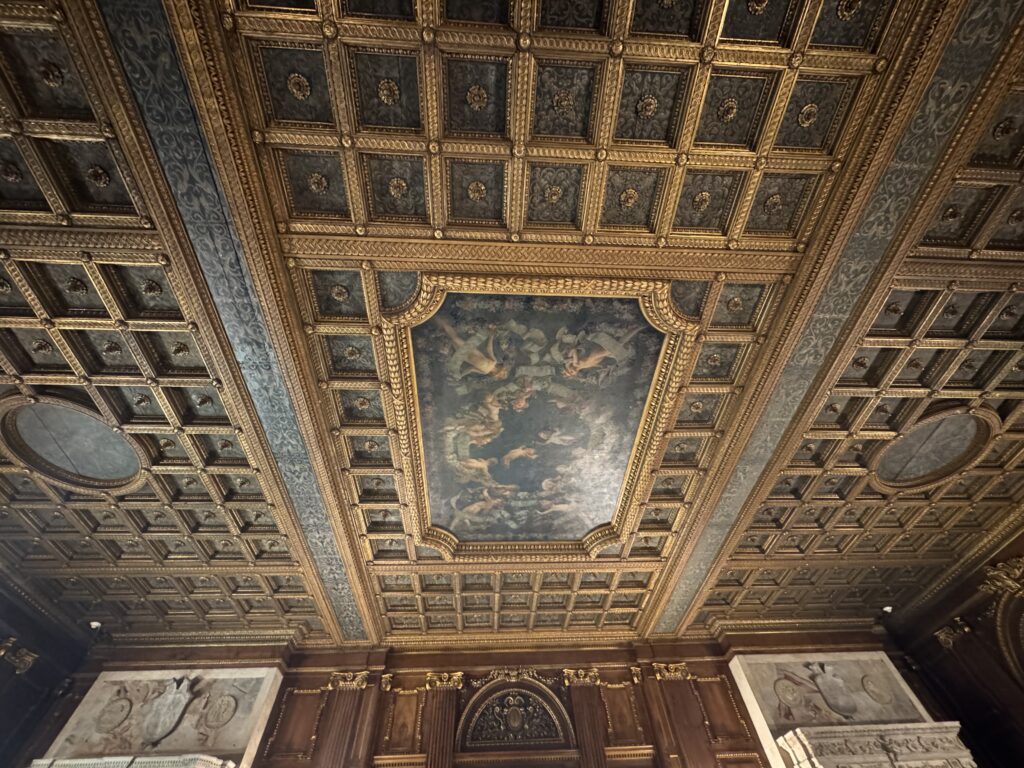
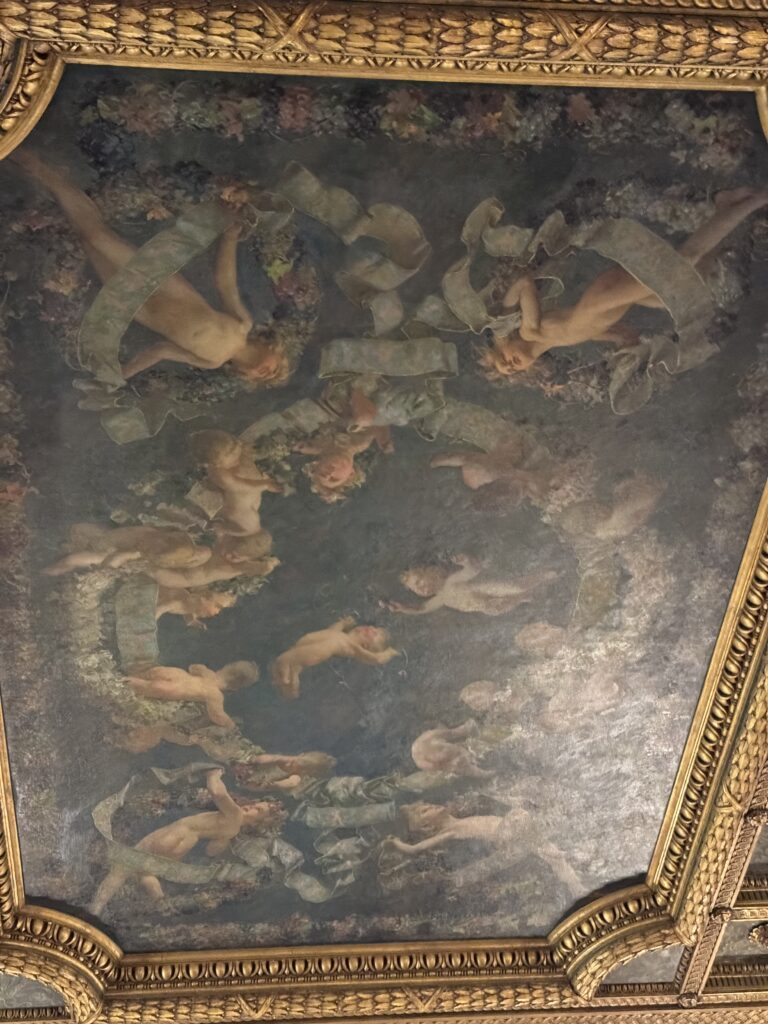
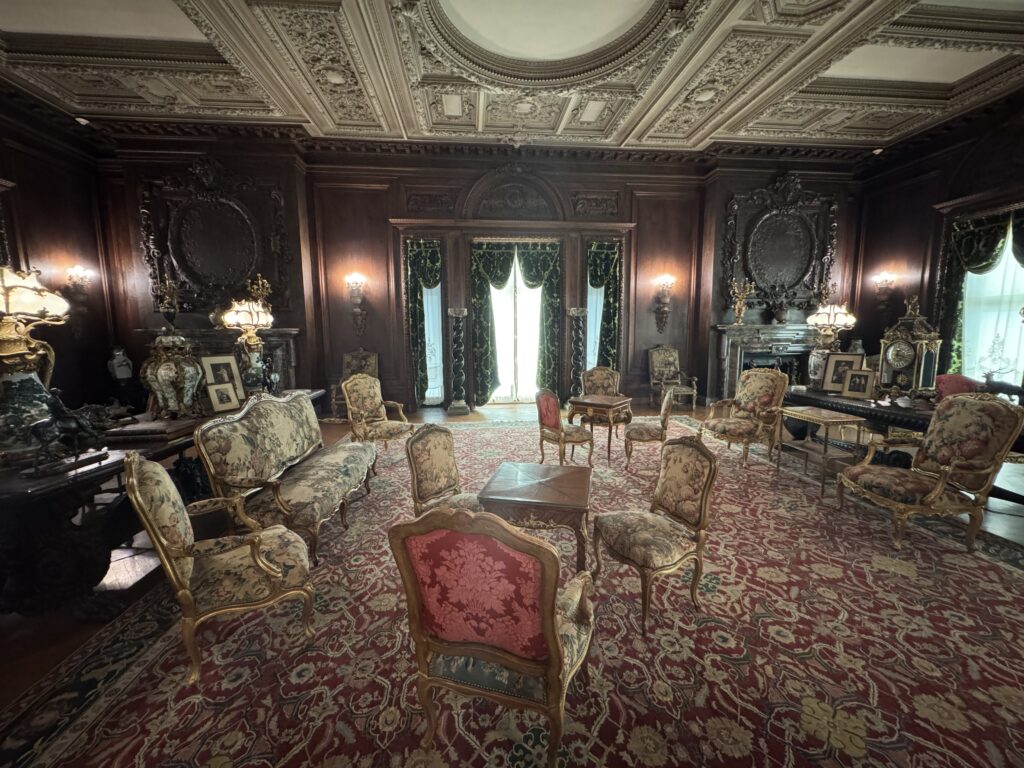
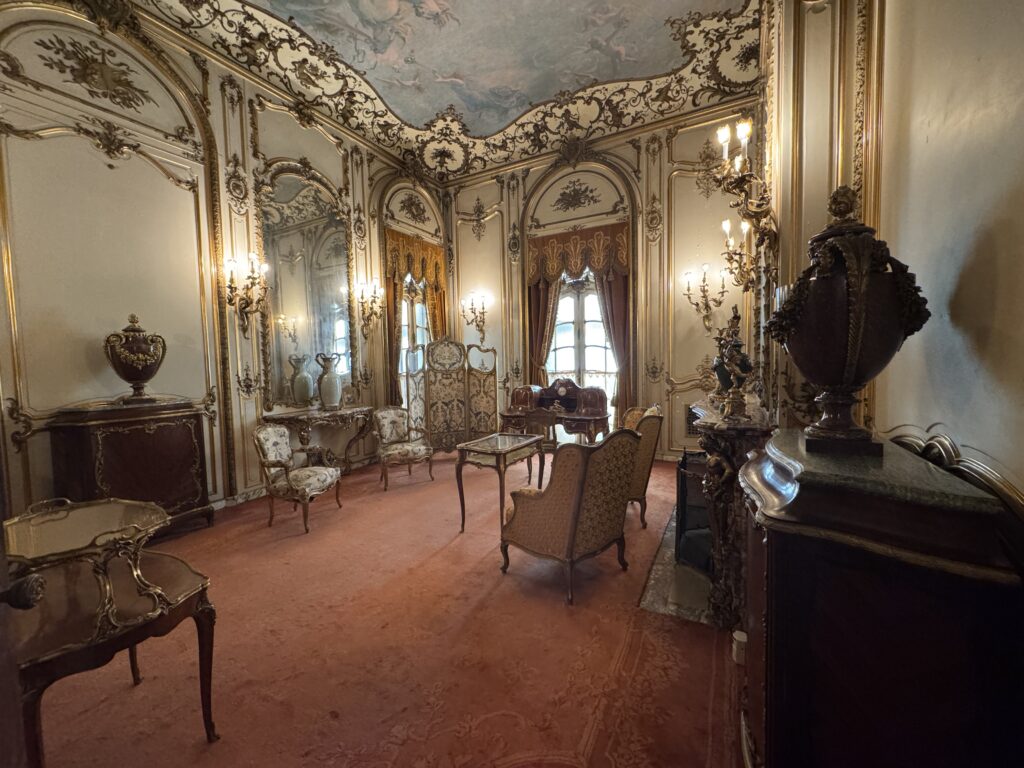
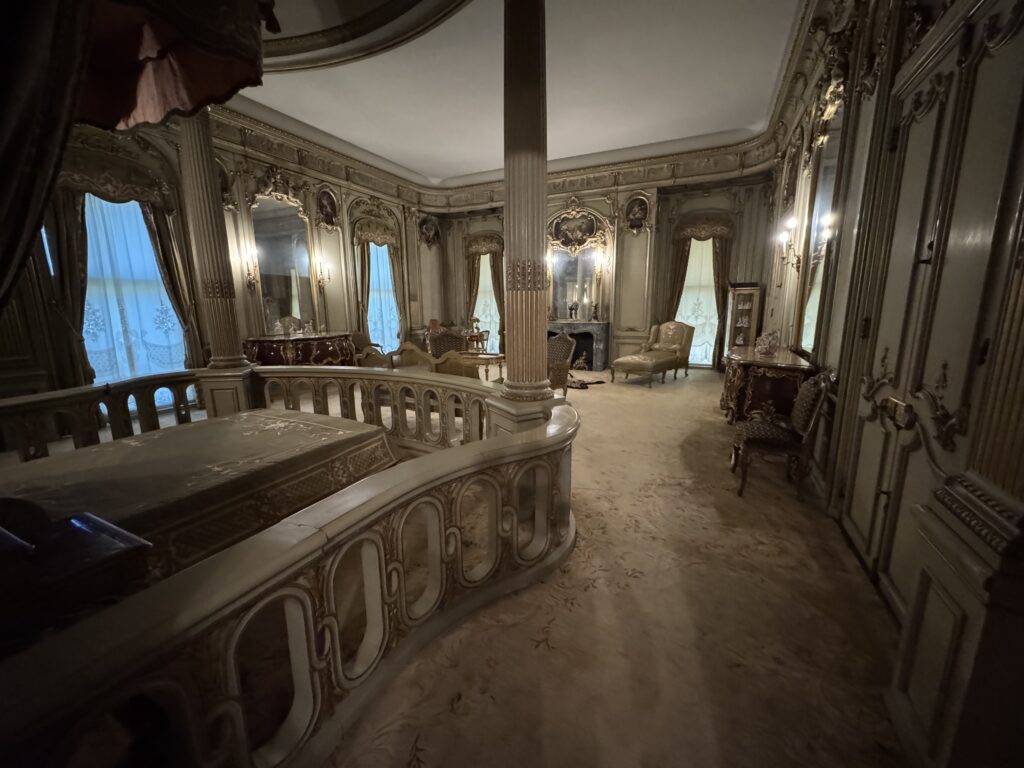
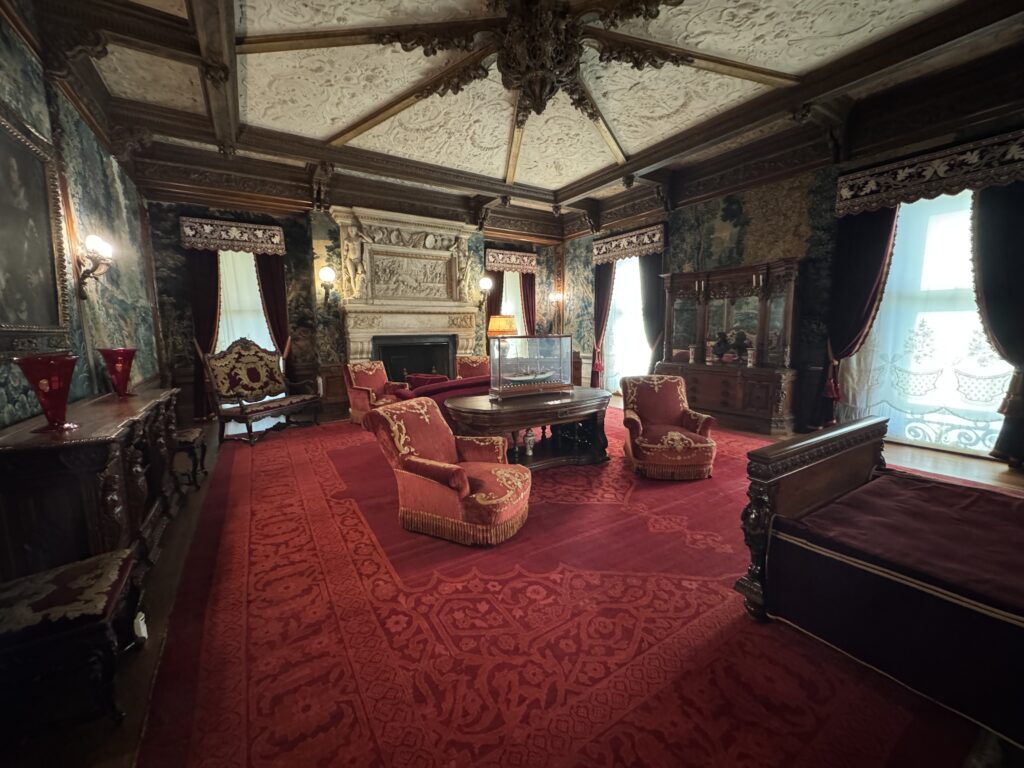
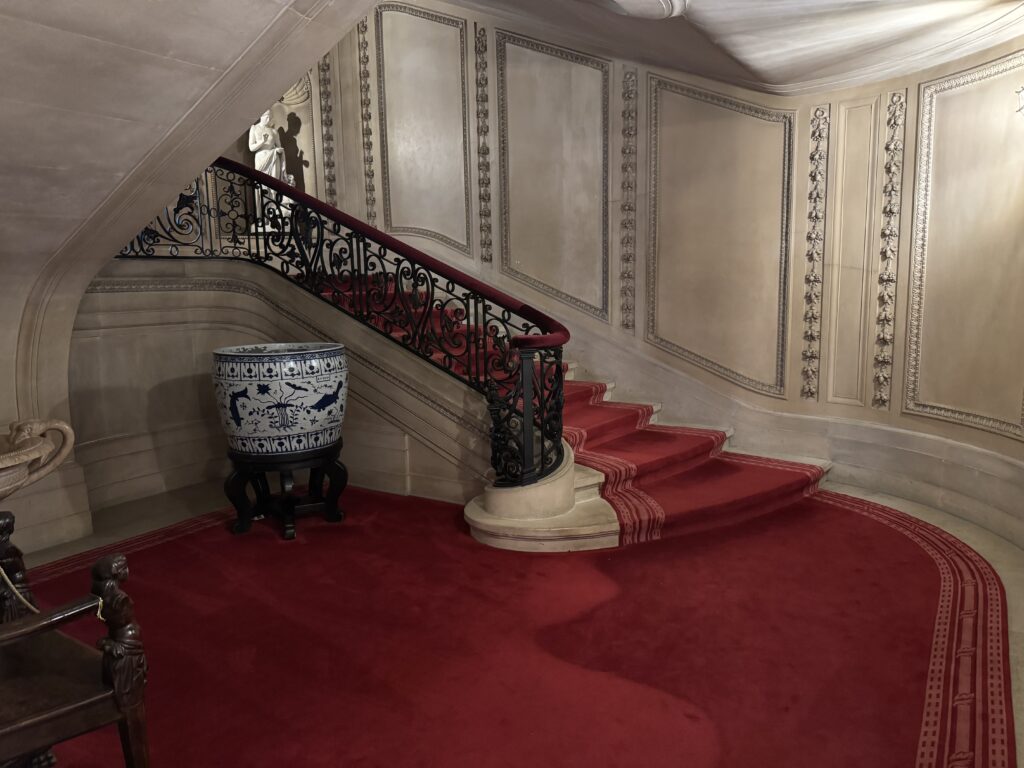
With only 54 rooms, the cottage, which was not designed by Frank Wright, was suitable for short term visits only.The cottage has a nice lawn, about 20 acres or so.Plenty of gardens. Here is a test to determine if you’re wealthy: do you have a 15,000 sq ft greenhouse, heated in winter, for the sole purpose of providing fresh cut flowers? If the answer is yes, you are wealthy.Fred valued his alone time, so the dining room could accommodate only 16. 12 at the main table and 4 at the overflow table. The ceiling was plundered from an Italian palazzo and re-assembled in Hyde Park. Fred didn’t like the original centerpiece artwork, so he commissioned a new one from the famed American artist, Edward Simmons.The cottage was considered innovative at the time, for its inclusion of a “living room.”The Gold Room, used by the women for gossip parties.The bedroom of Louise, Fred’s wife (they didn’t sleep together, because…well…that’s just icky.) She has a barricade around her bed, because Marie Antoinette had one and Louise idolized Marie.This is Fred’s bedroom. Early humans were small by modern standards and required only small beds. No California Kings needed. By the way, Fred and Louise strictly adhered to hygiene standards and had fresh sheets after each use, even after a brief nap!No house can be without a grand staircase, which the servants (of which there were normally 20) were not permitted to use.
Frank Wright enjoyed sketching houses, some of which were actually built! This is one of those.
There was a time in the 1920s and 1930s that a family named Kaufmann amassed a great fortune by gouging customers at their Pittsburgh, Pennsylvania, department store.
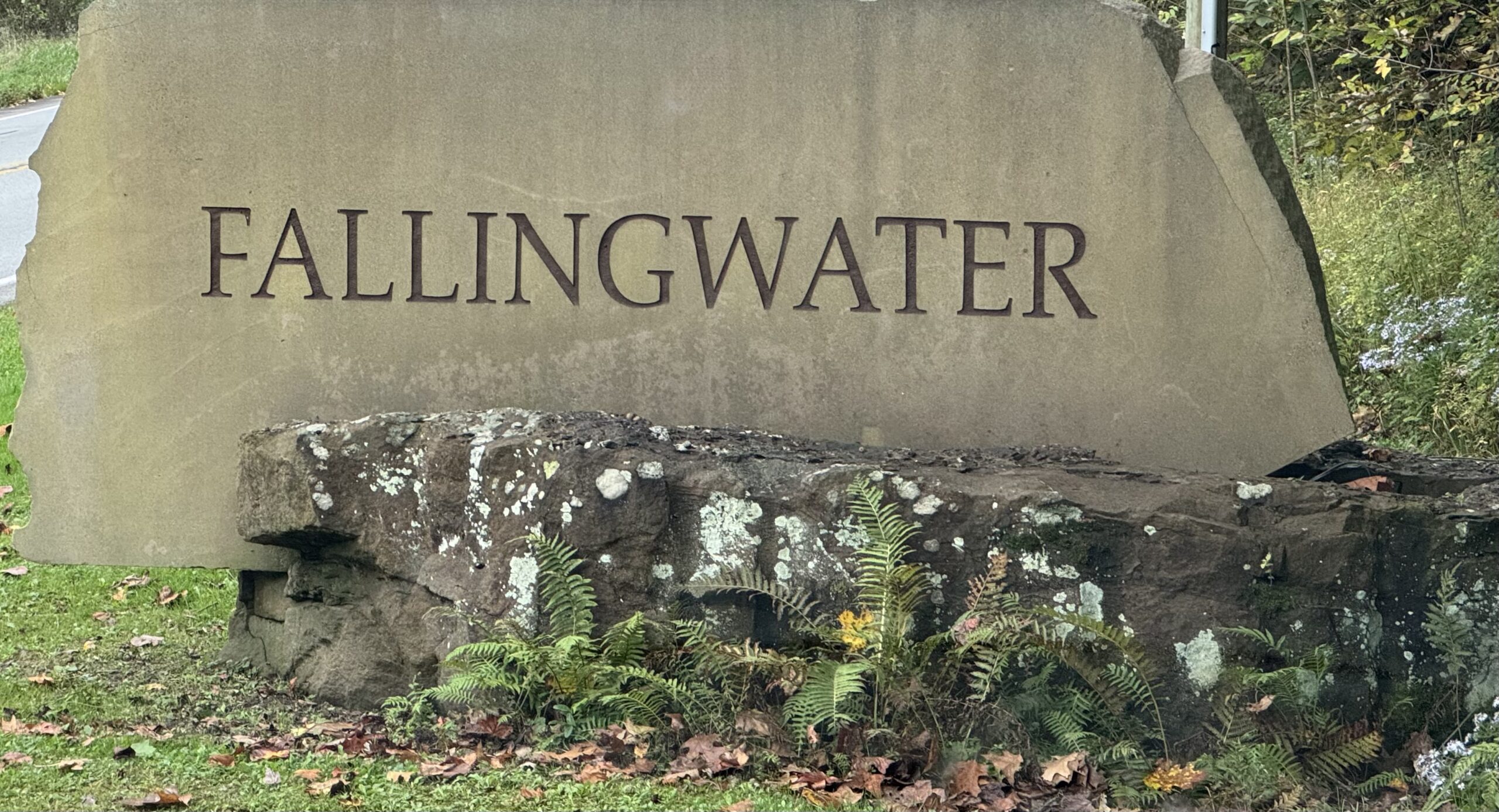
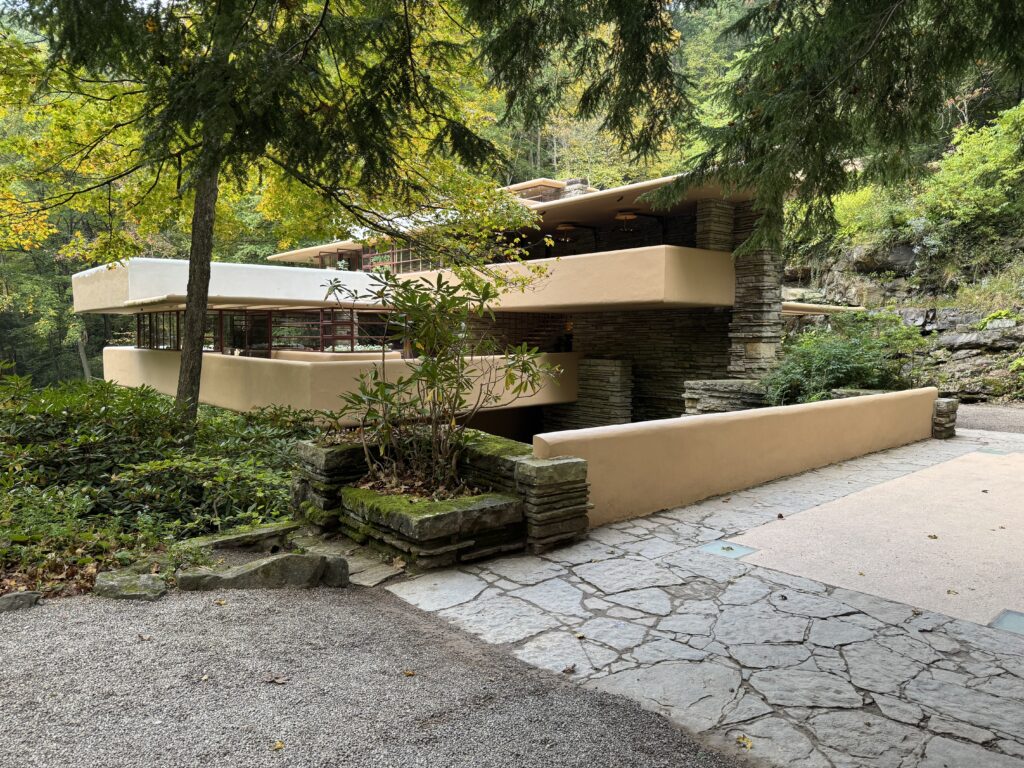
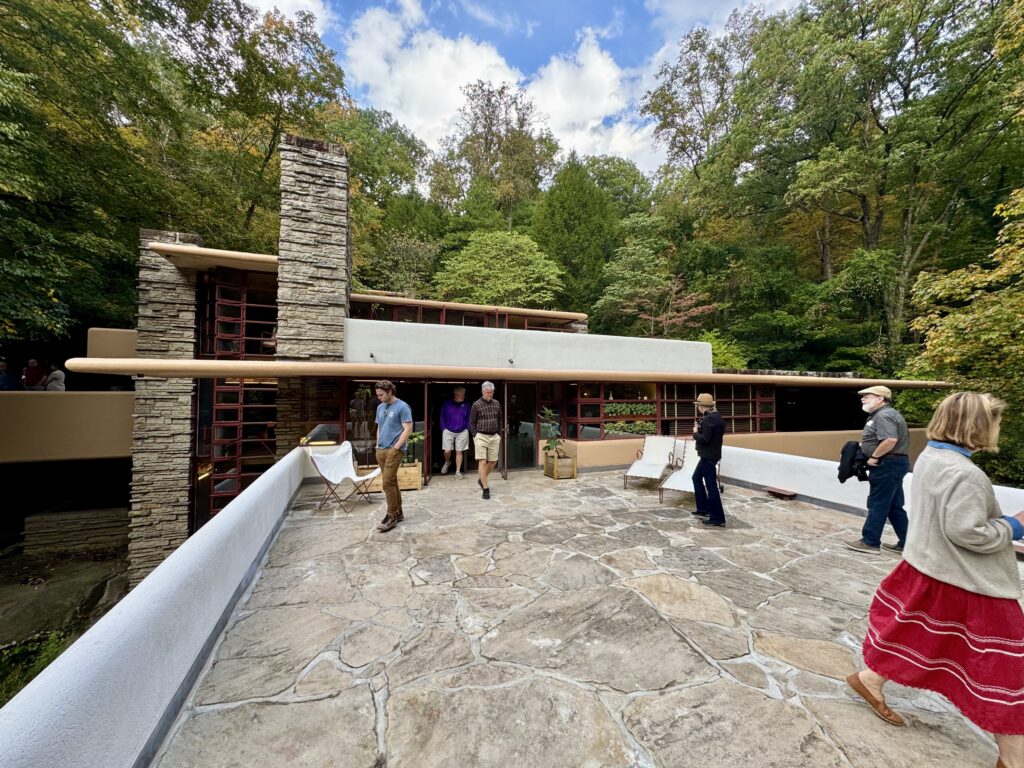
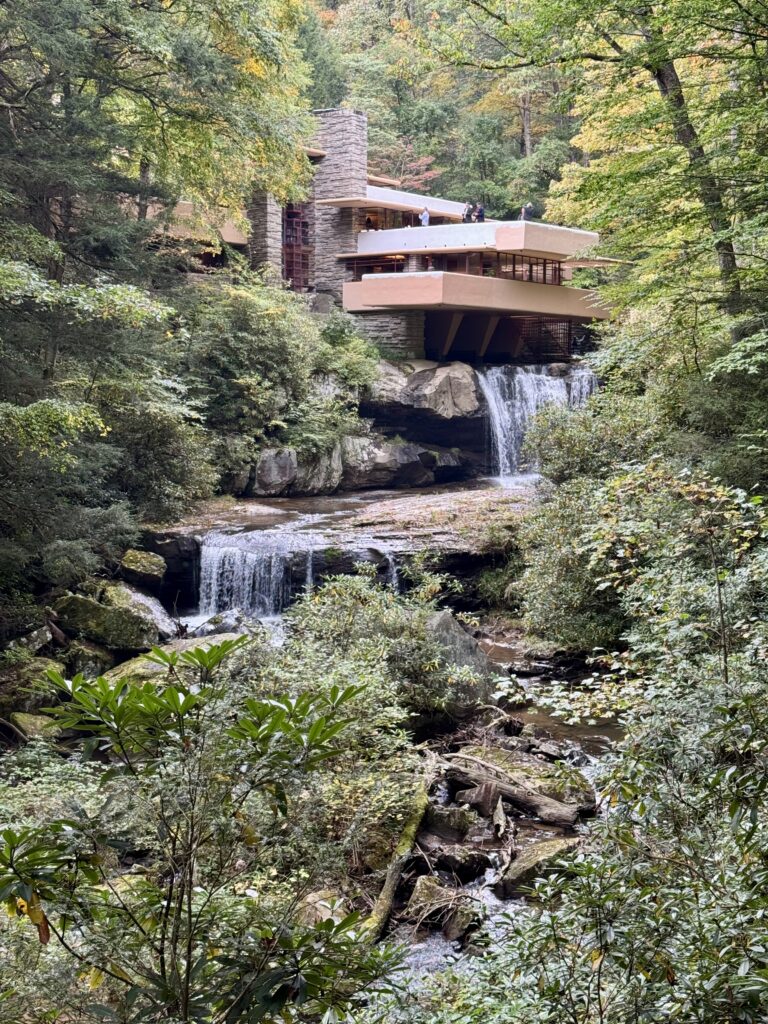
Rich people, of course, need weekend cabins in the remote woods to rest and think of new ways to fleece their customers. So the Kaufmanns hired Frank to design their cabin, which they named Fallingwater because it hovers over an actual waterfall.
The house was built in mid-Depression for a cost of around $150,000. For comparison, the guide informed me that an upper-class 4-bedroom brick house in Pittsburgh cost, at the time, around $5,000. That’s right, their weekend cabin was 30 times the cost of a normal wealthy person’s house. So great was the Kaufmanns’ fortune, that they also had vacation homes in Palm Springs, Greece and elsewhere.
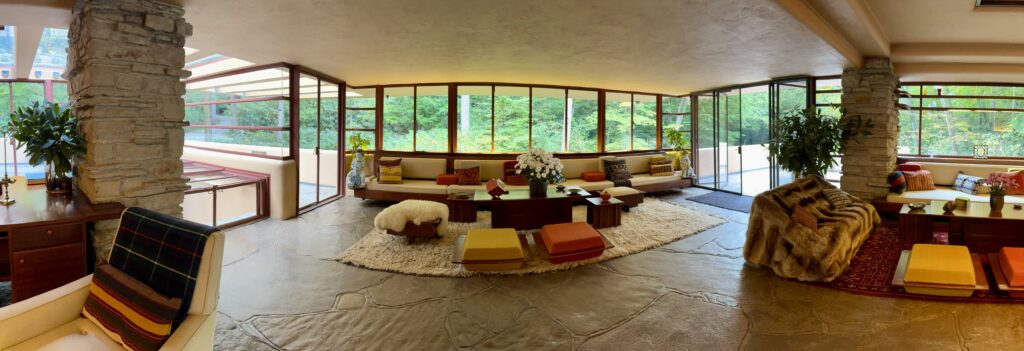
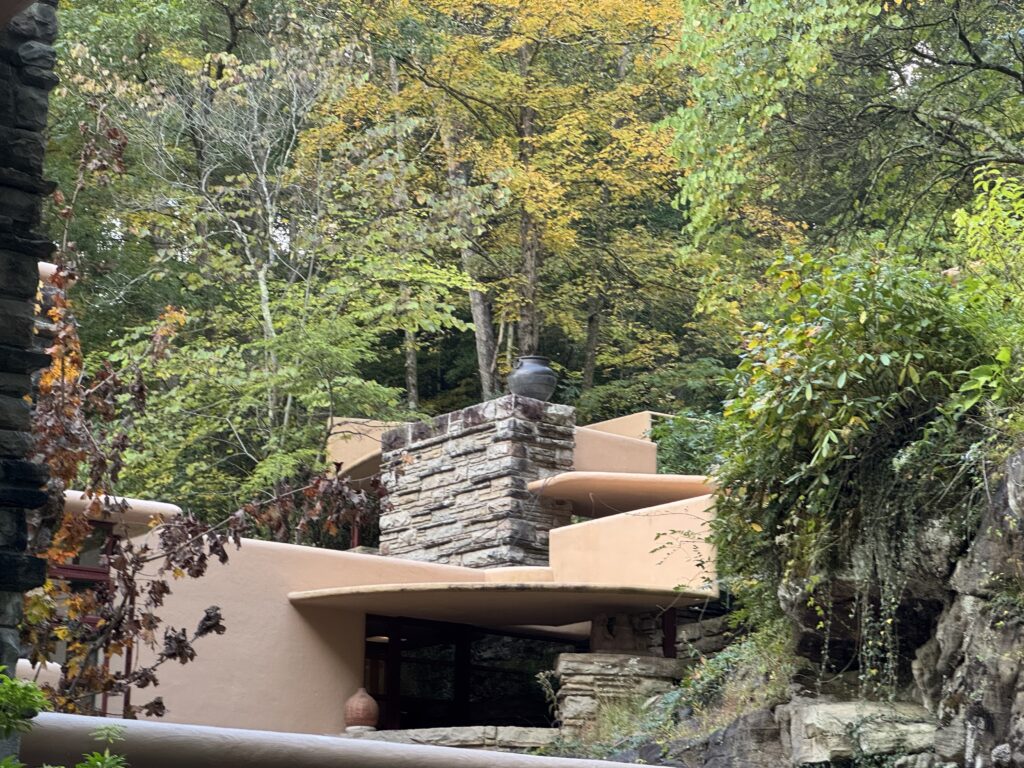
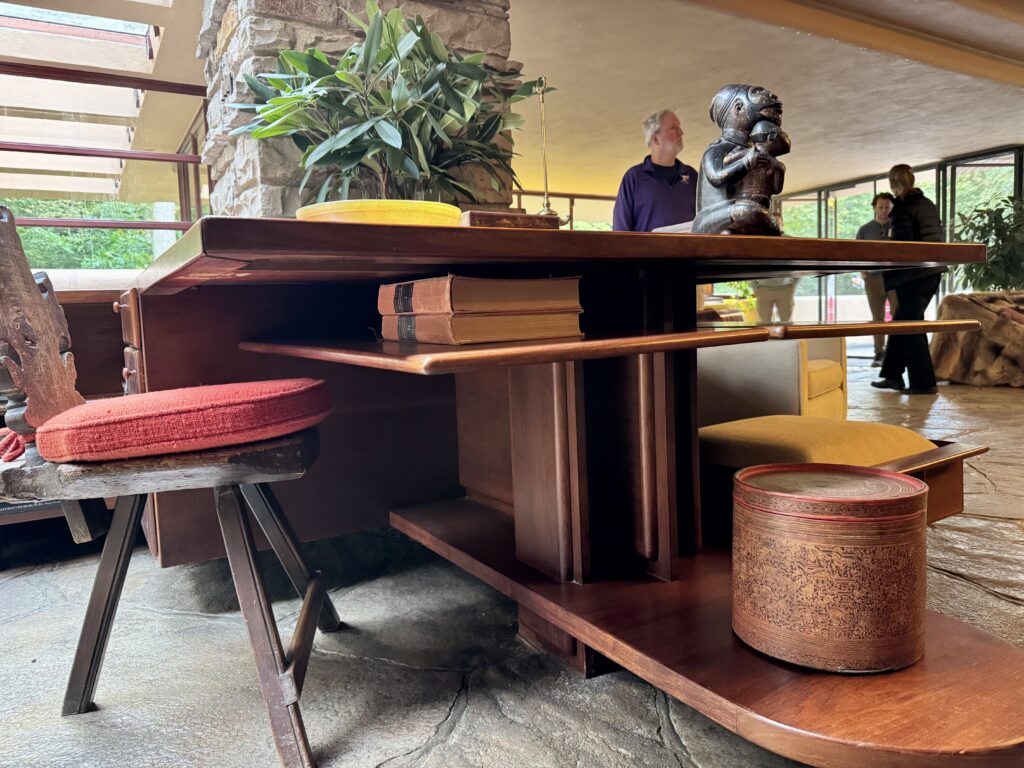
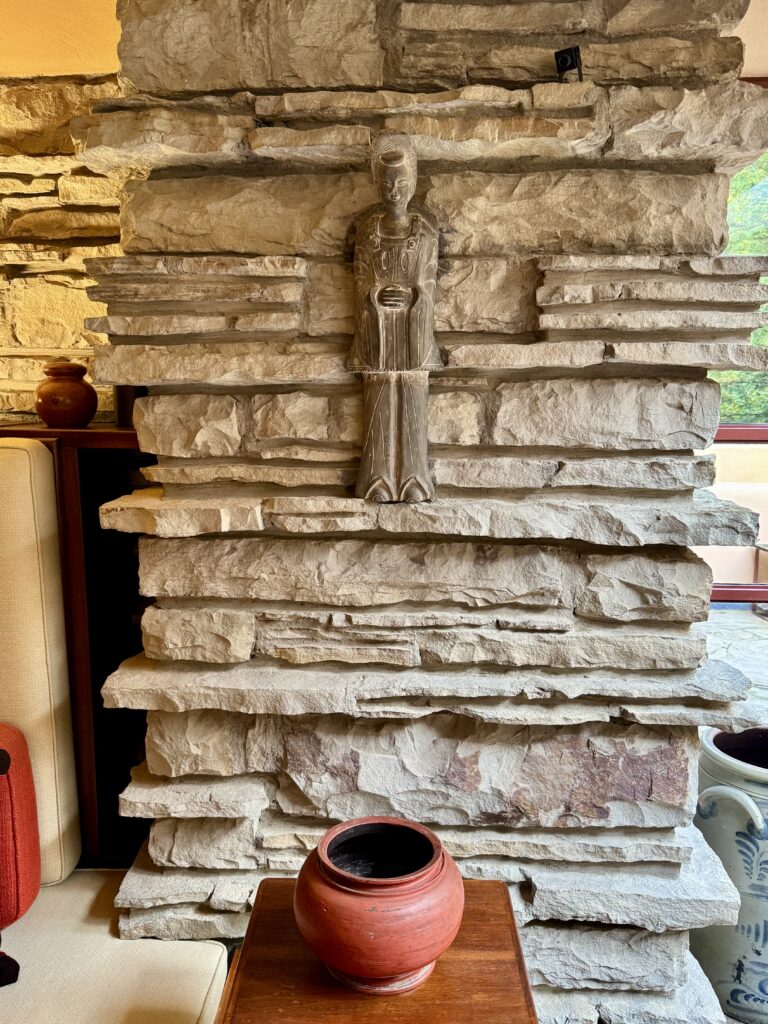
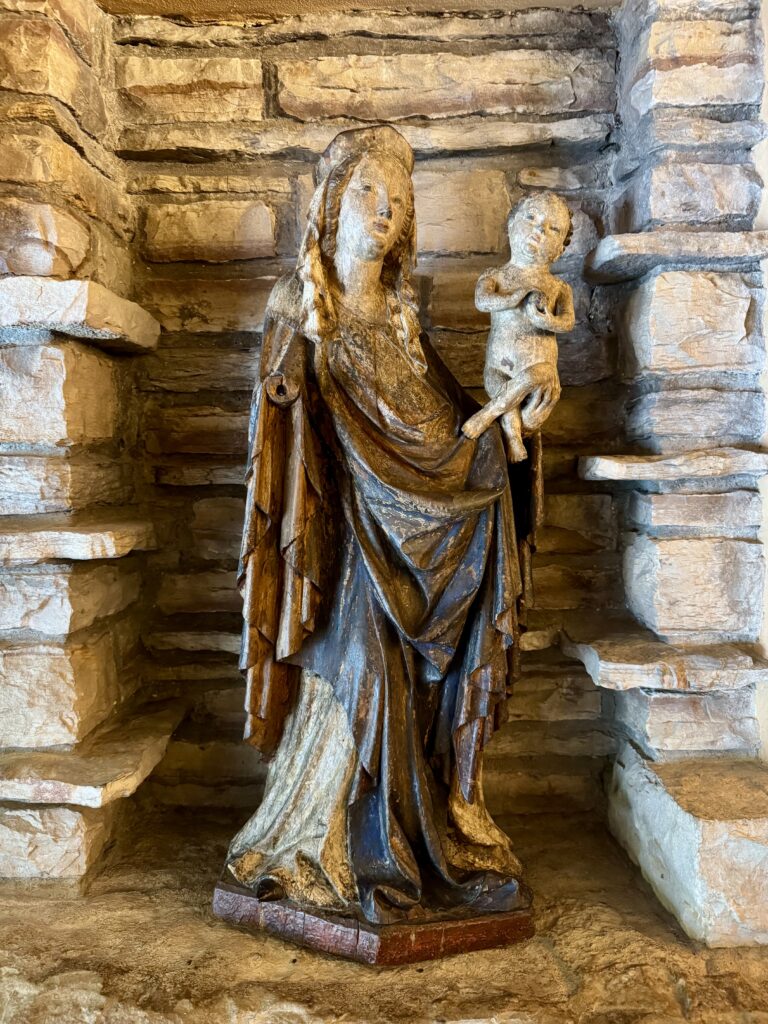
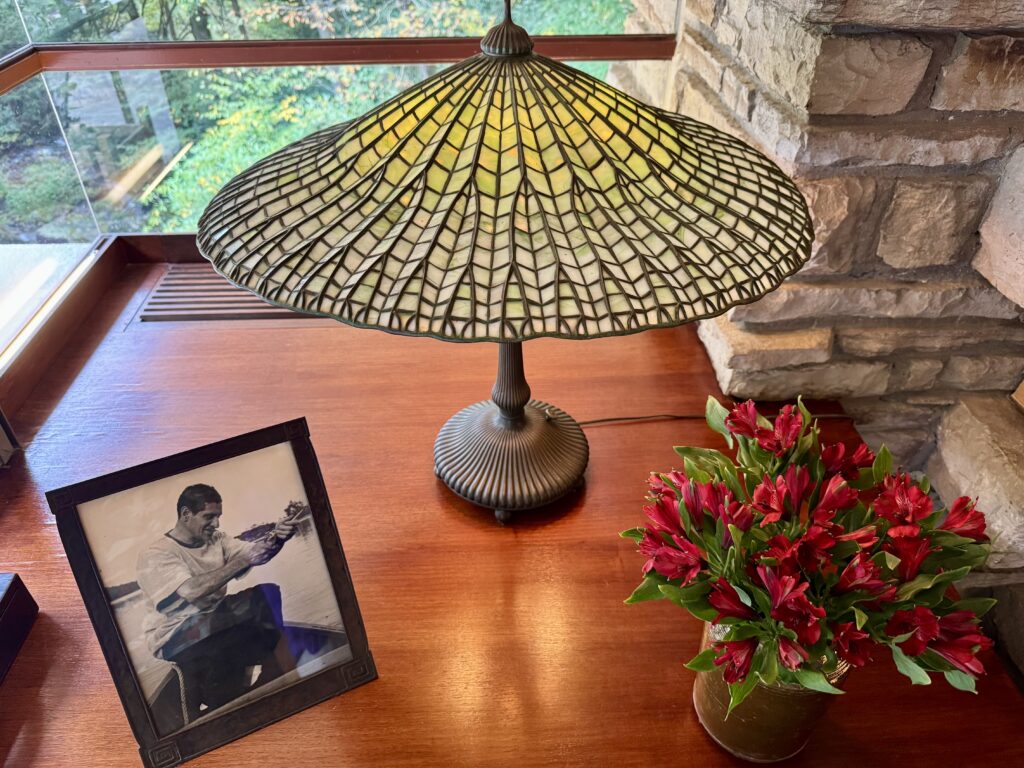
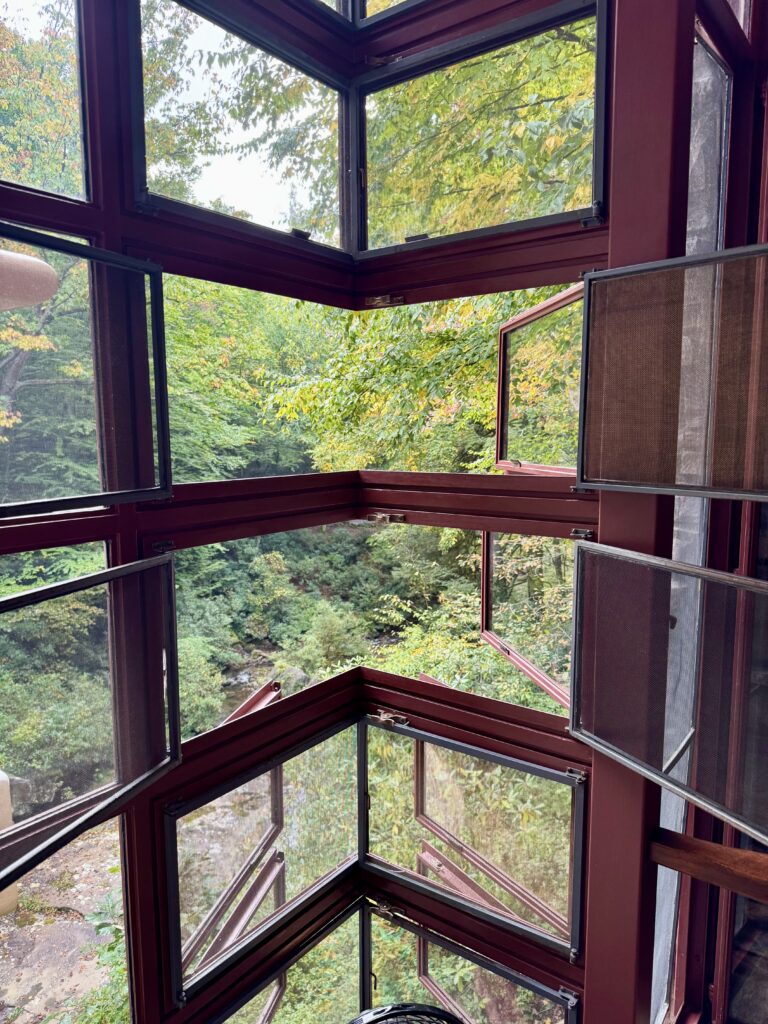
This is the view the Kaufmanns would have seen as their chauffeur drove them to the cabin.Although well known to modern people, Frank’s open floor plan was considered innovative at the time.Whoops! A construction worker left a clay pot atop the chimney.A nifty desk with cantilevered shelves echoing the design of the house itself.Expansive terraces are a major feature of the cabin.Rich people can have houses designed around their favorite knick-knacks.This Madonna and Child dates from 1420.A nice Tiffany lamp lights the bedroom desk.Clever design and engineering allow this window to omit the support in the corner. This is one of Frank’s most significant contributions to the field of house design.The view from the foot of the waterfall.
And that’s not a typo…it really is called Kentuck Knob. According to legend, a colonizer left New York for Kentucky to wrest land from the native Americans. But he got to western Pennsylvania, loved the place and stayed. Apparently he decided that, if he called a piece of Pennsylvania Kentucky, he could declare victory. Somehow or another, those dwelling therein lost the “y”.
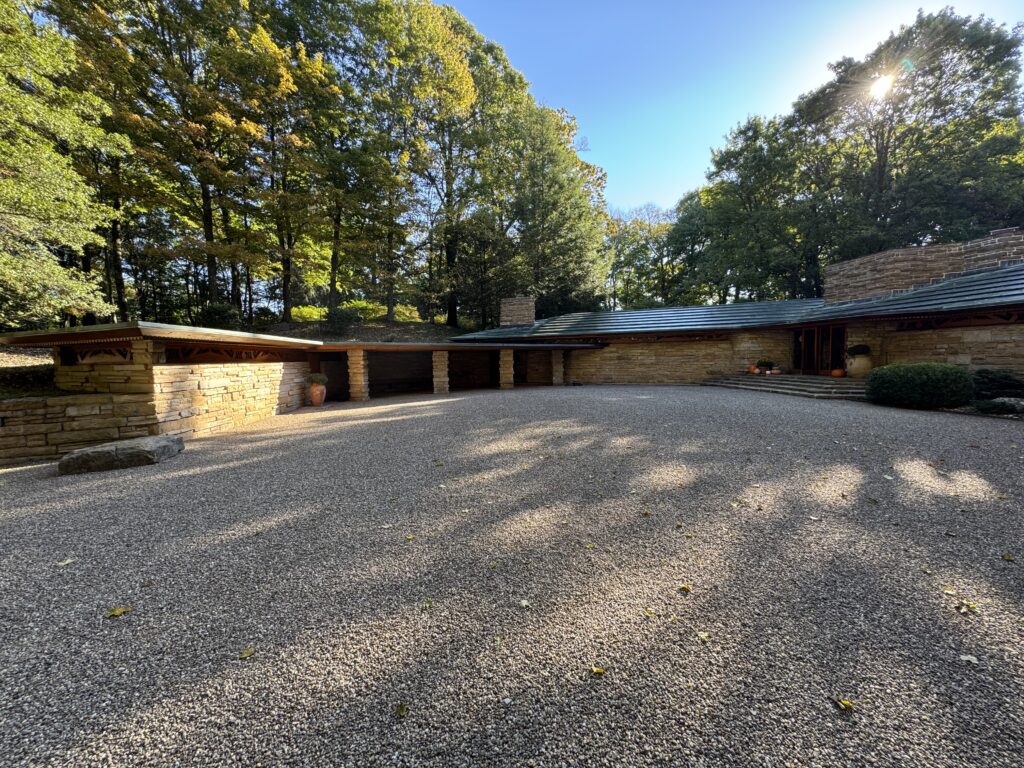
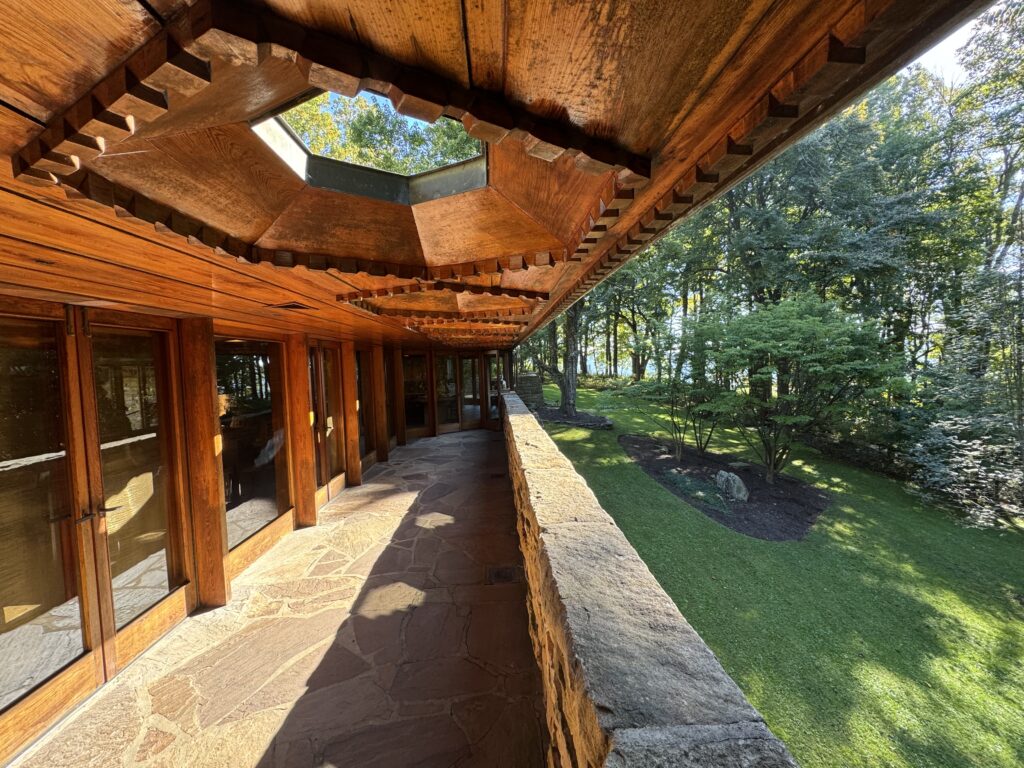
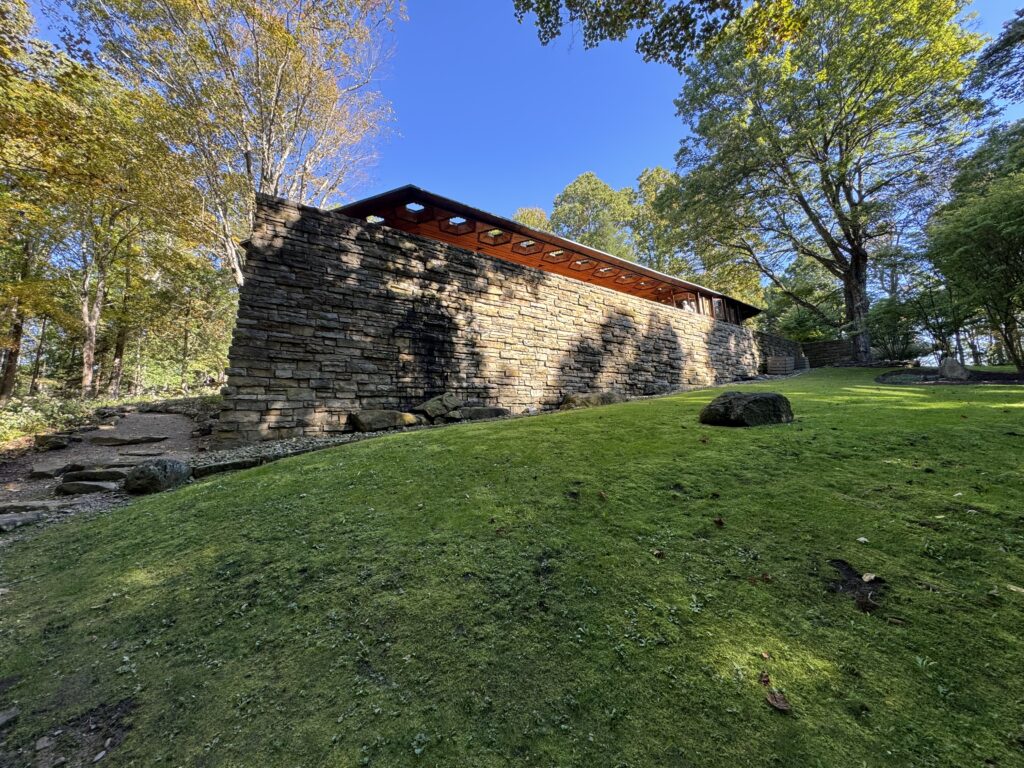
There was a family, the Hagans, who became rich in western Pennsylvania by selling ice cream. They were impressed by a nearby house, Fallingwater, learned that the architect was Frank Wright and hired him to design a house. Frank was well known for designing with nature and designed the house to integrate with its setting. The result was impressive with an almost-excessive attention to detail.
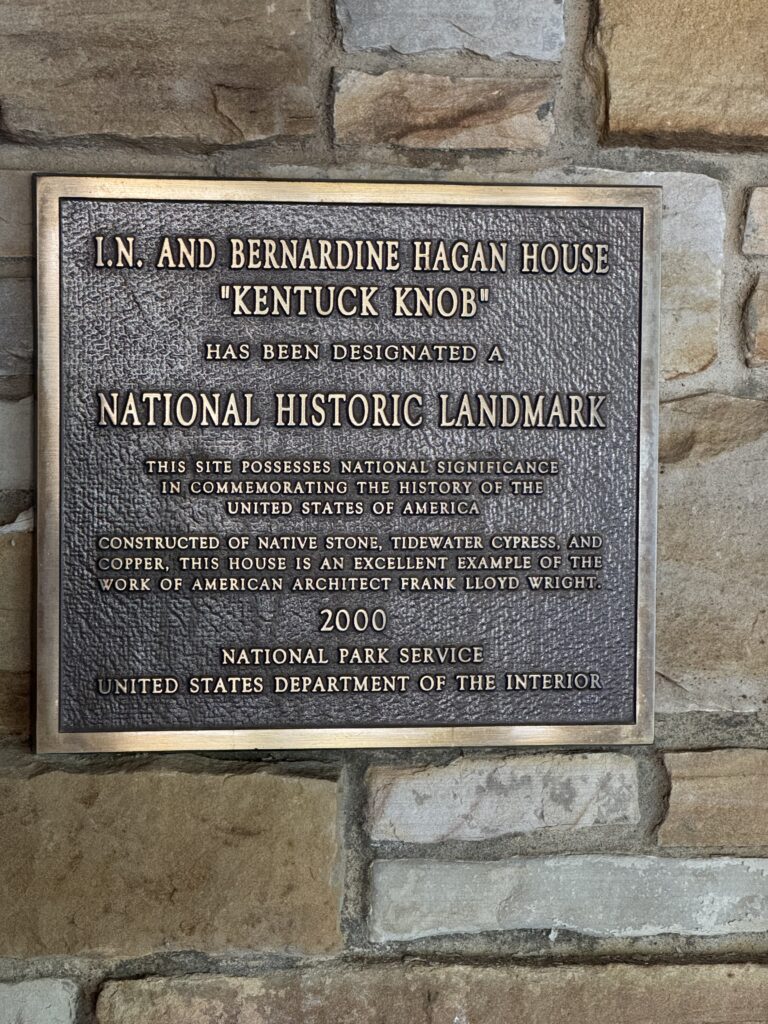
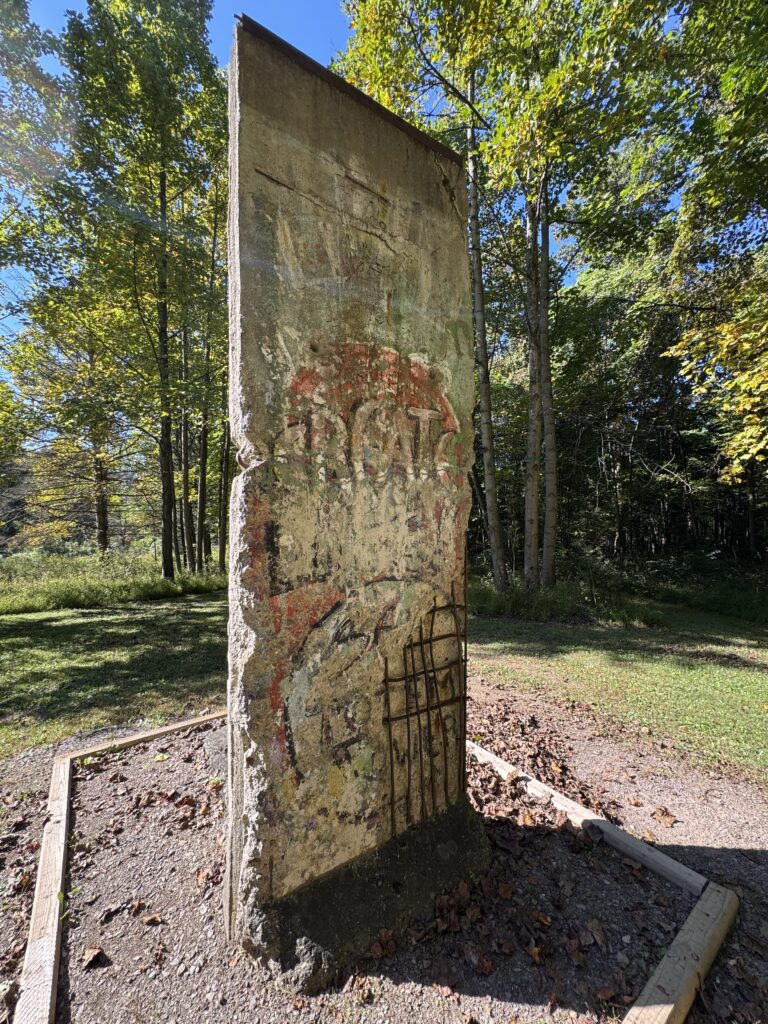
You can tell that the house is important, because only important houses get brass plaques.The floor plan is based on a hexagonal grid of equilateral triangles which, when overlapped, form parallelograms. This design language is carried throughout the house, as shown in this hexagonal skylight.The back side of the house is embedded in the hillside. This side rises like a great prow.The current owner of Kentuck Knob is an unknown Englishman named Baron Palumbo (not kidding). He is a collector of practically anything, including this chunk of the Berlin Wall. He has numerous other sculptures, which he has scattered throughout the grounds.Xena, the Warrior Princess, prowls the early morning fog.