In 1536, an apostate Catholic priest, Menno Simons, thought believers should be baptized as adults instead of infants. He formed the Mennonites. Professing a belief in adult baptism was a capital crime in those days (as some think it should remain so today), so the authorities rightfully arrested and killed them.
In 1693, Swiss bishop Jakob Amman yearned for a more demanding and severe form of Christianity than the Mennonites offered, so he formed the Amish (get it? Amman => Amish. In addition to adult baptism, Amish believe that people should wash their feet. They also believe in the social shunning of former Amish, just as Christ prescribed.
Over time, the Amish tired of being deprived of their property and lives, so they accepted William Penn’s 1681 offer to move to the part of the New World we now know as Pennsylvania.
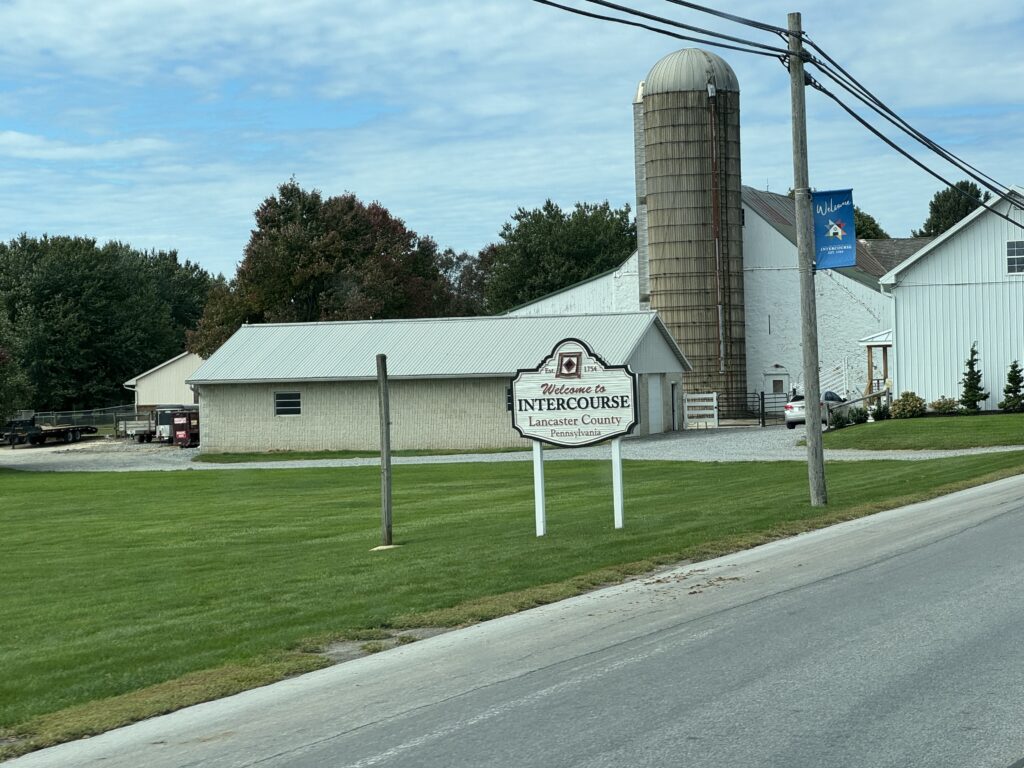
Upon arrival, the Amish found themselves unable to cope with the hustle and bustle of 17th century Pennsylvania, so they asked Penn for some place further removed from modernity. He sent them to Lancaster, Pennsylvania, where they remain to this day.
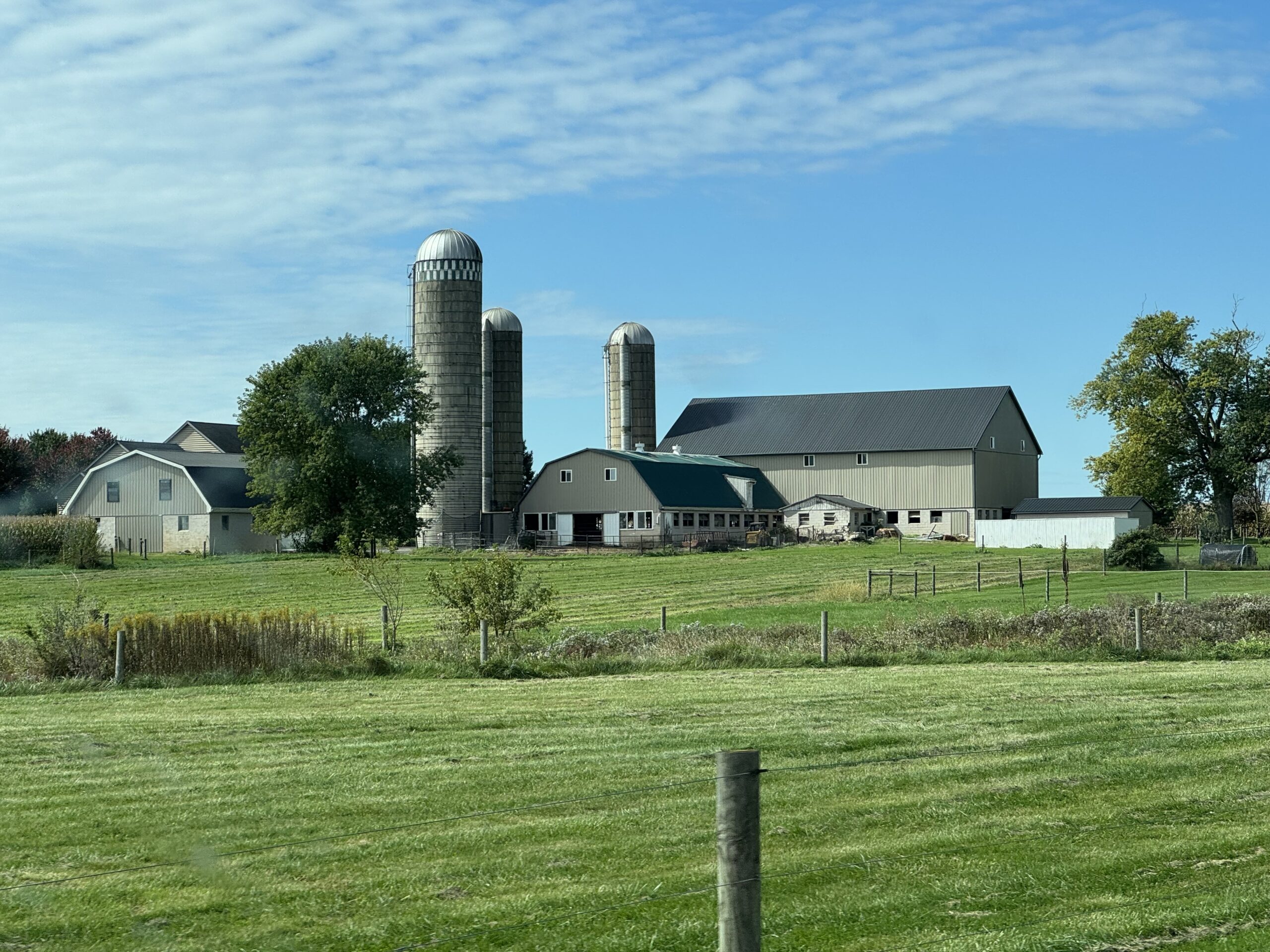
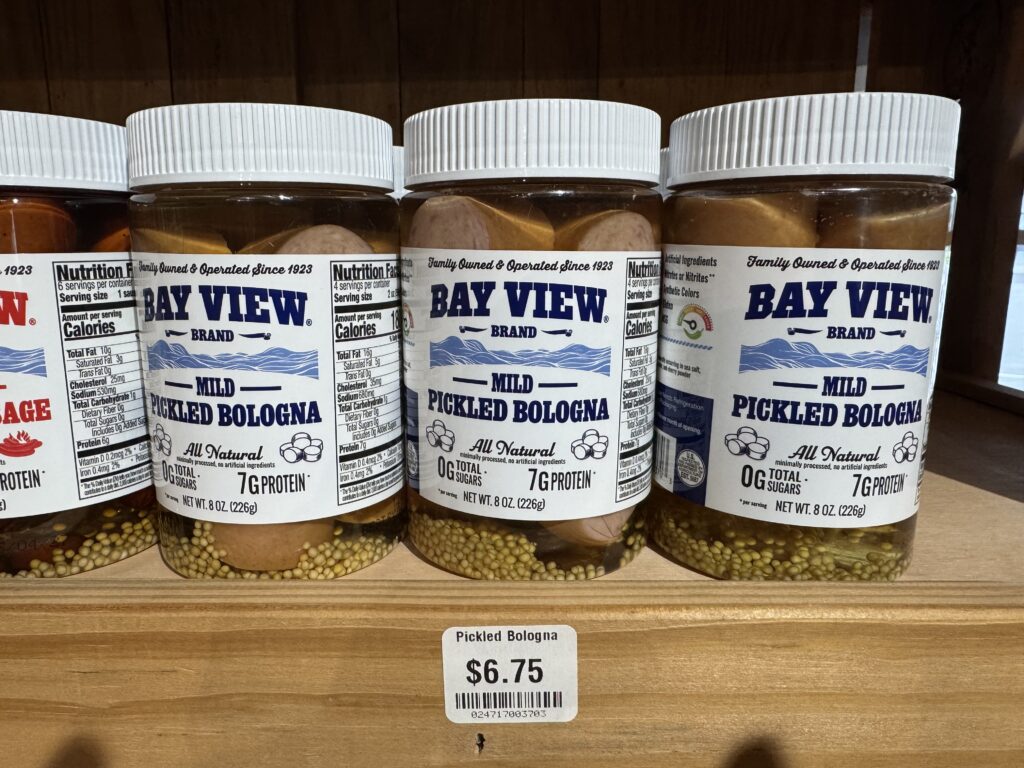
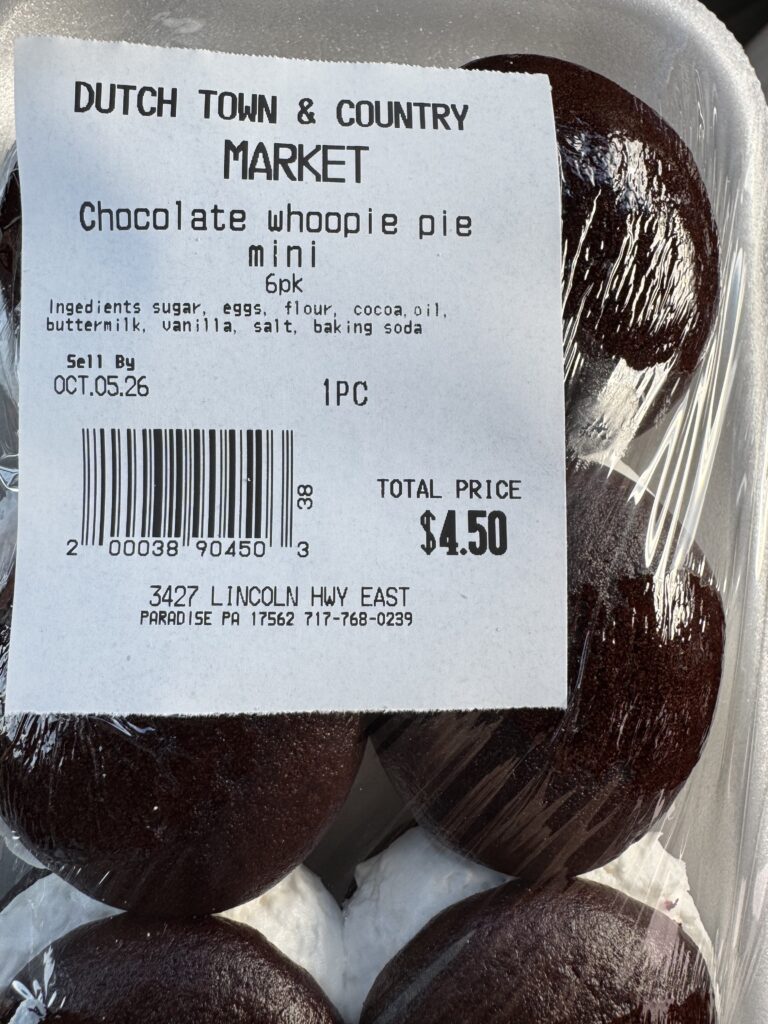
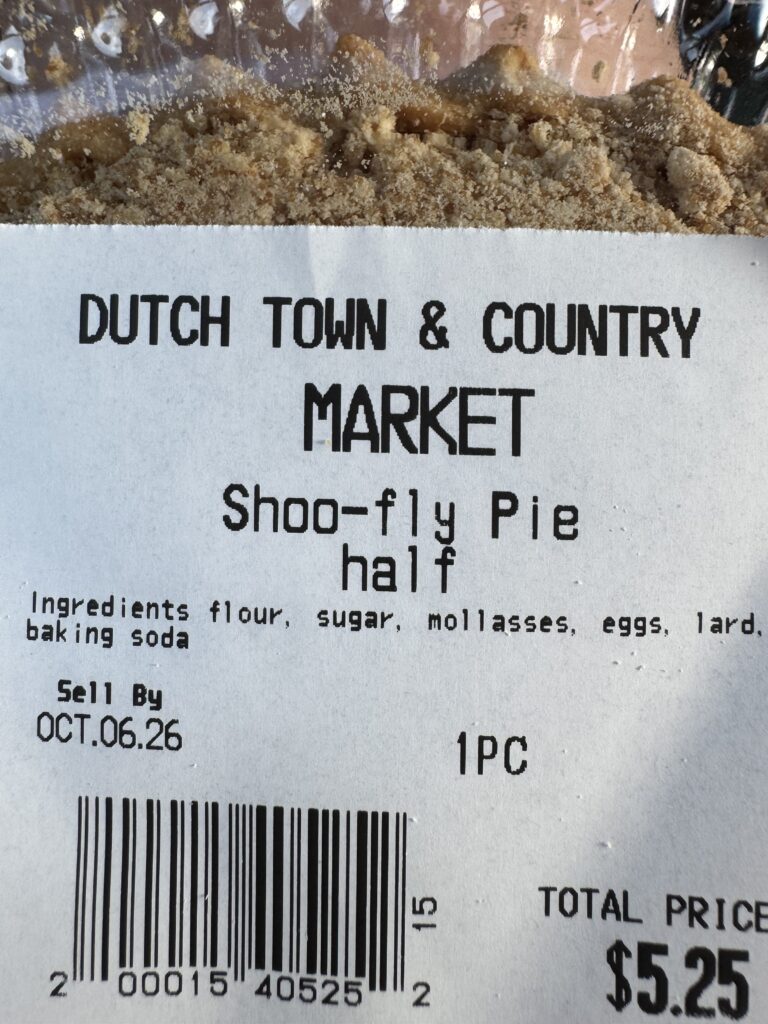
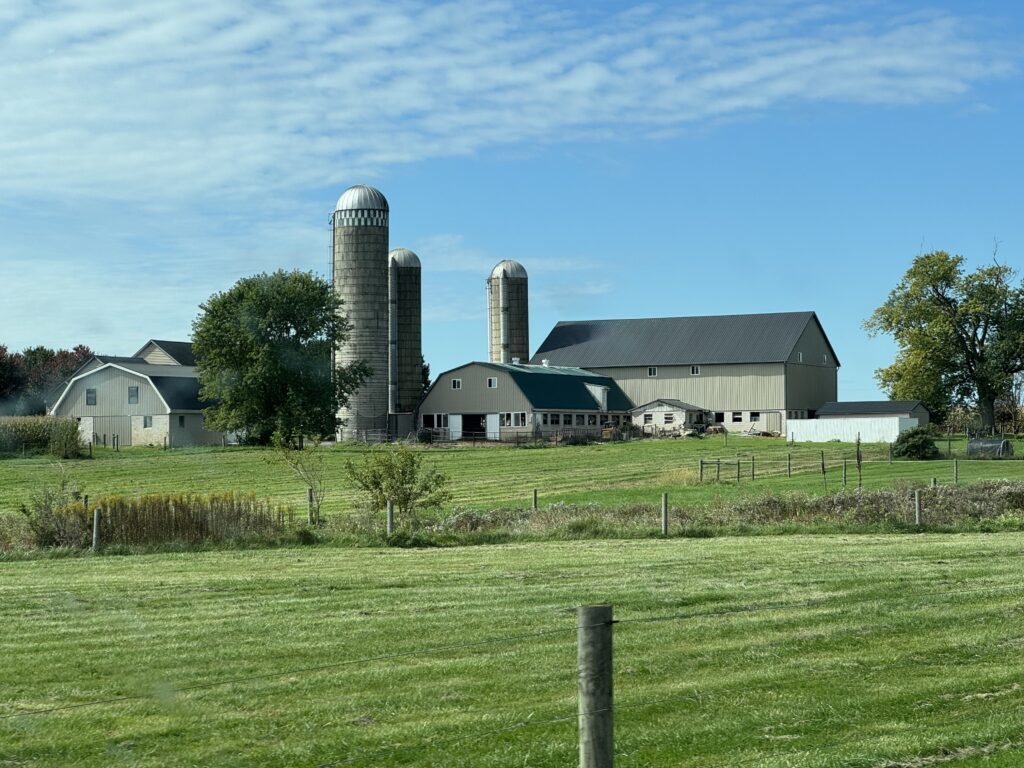
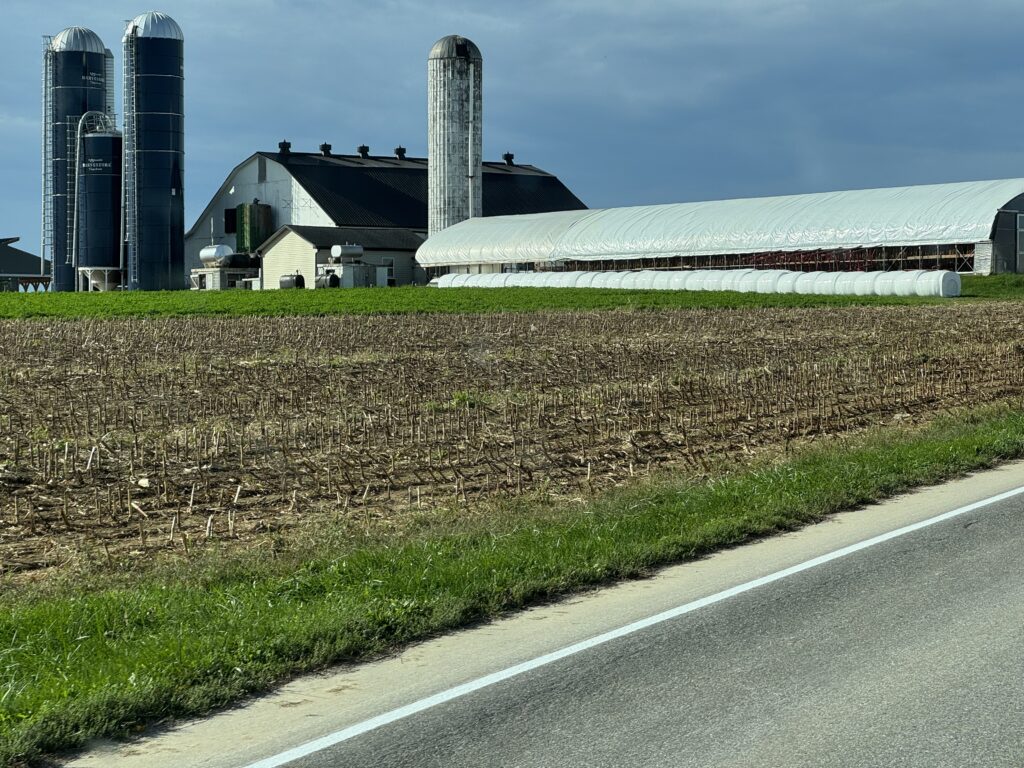
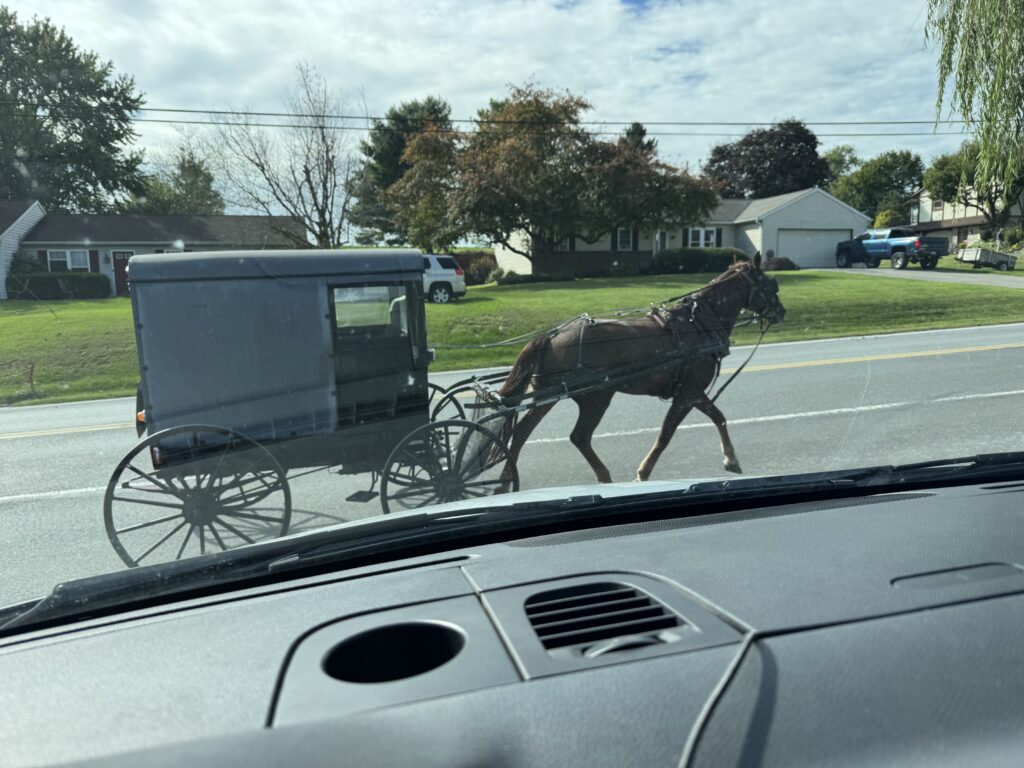
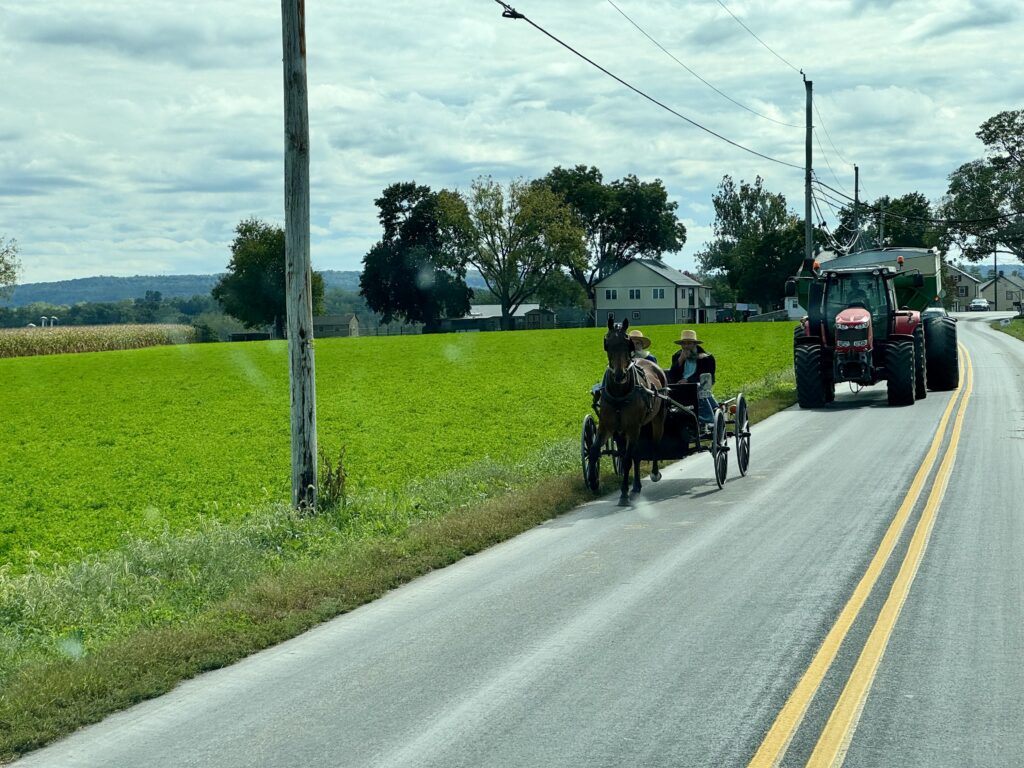
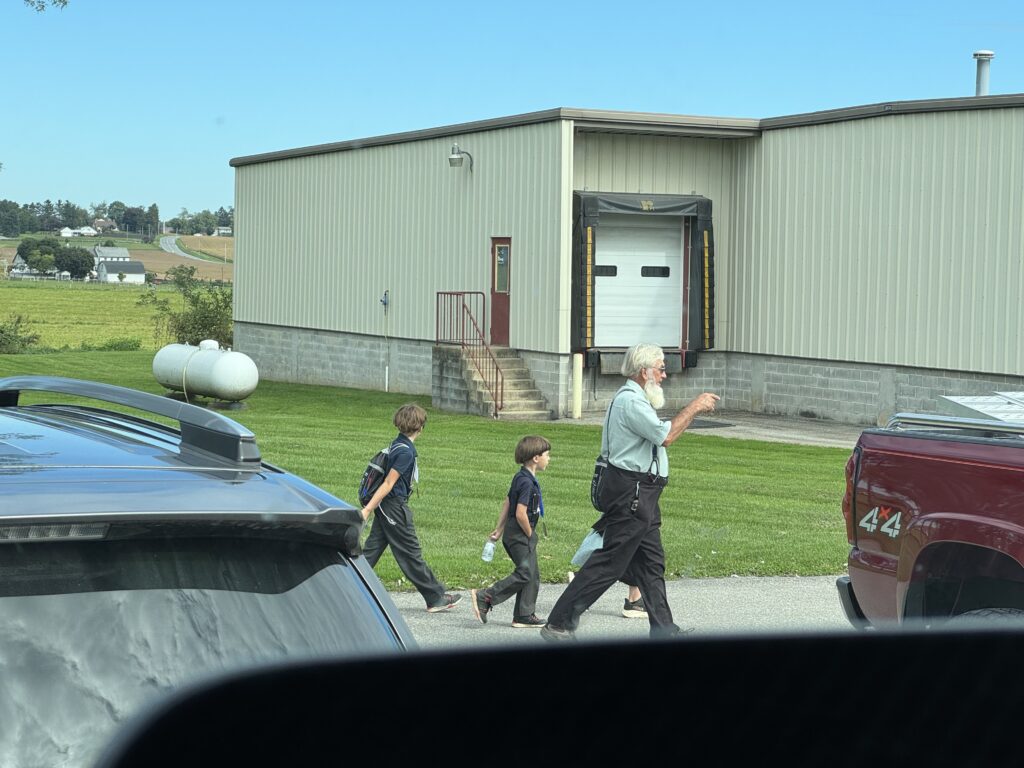
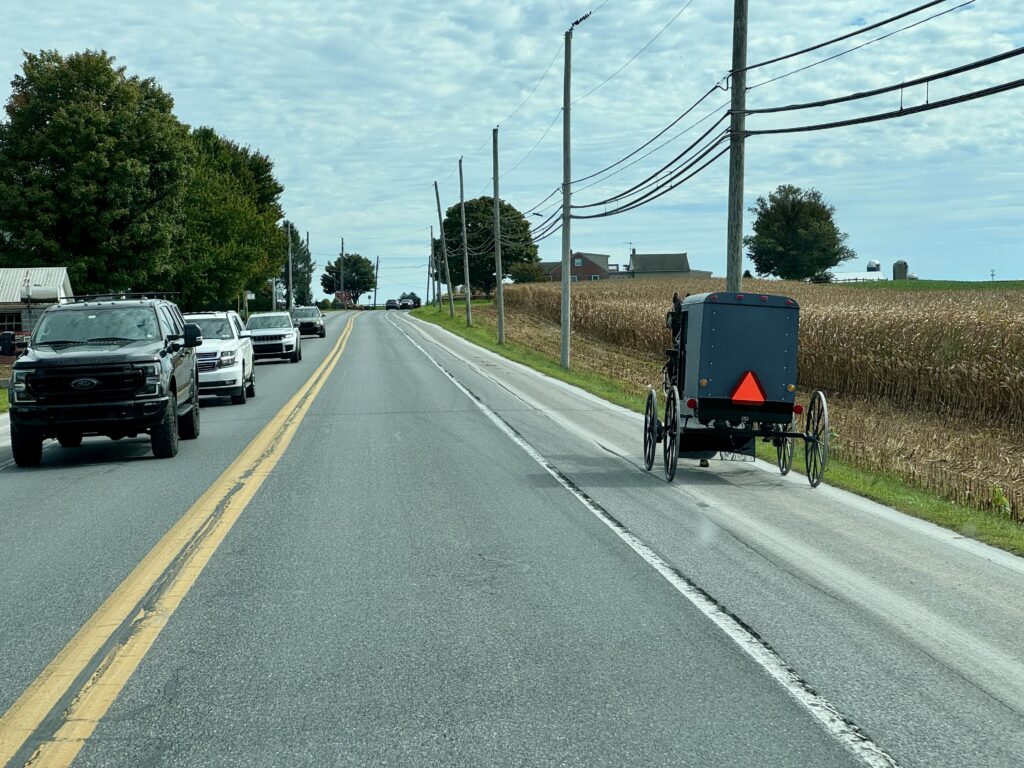
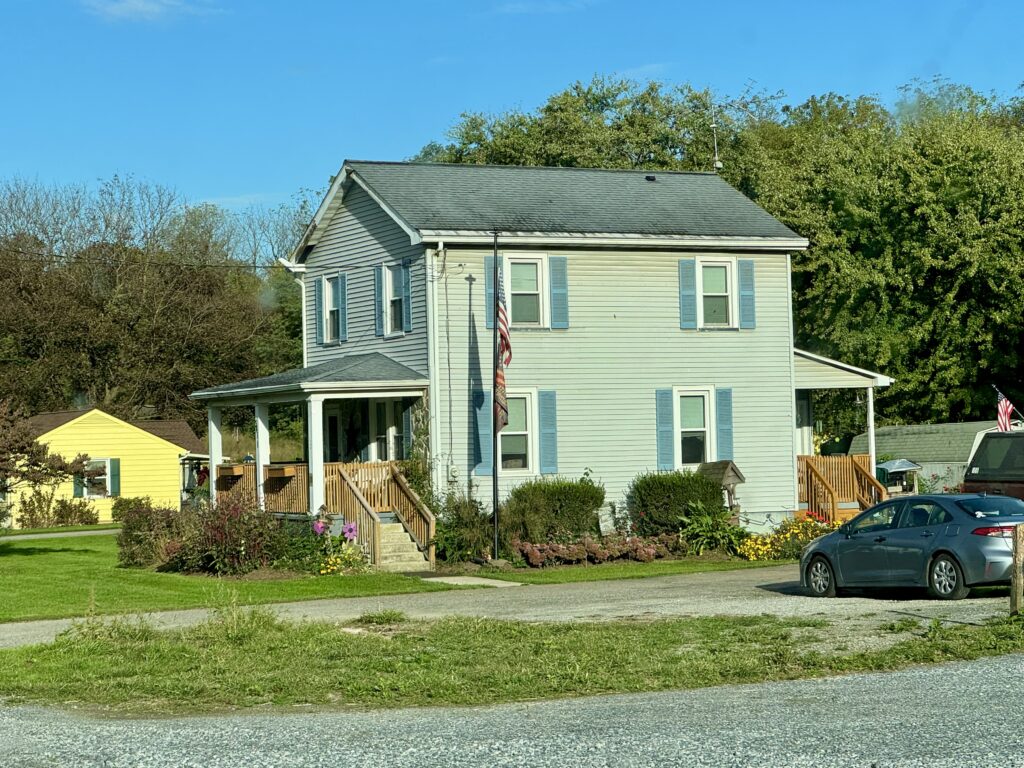
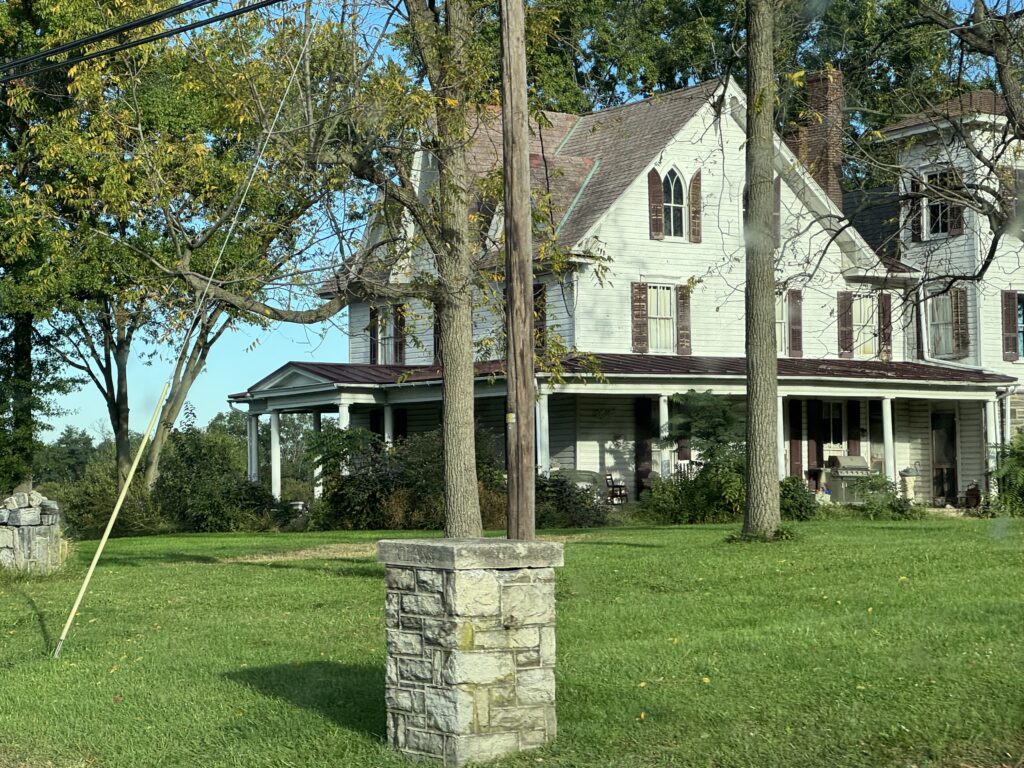
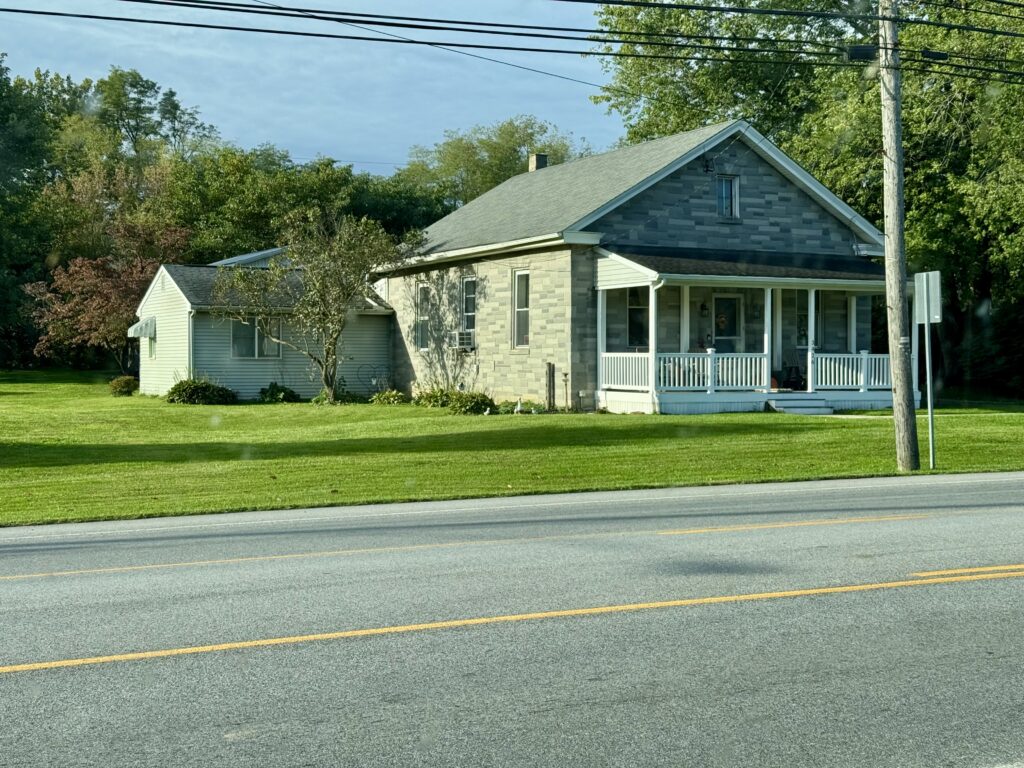
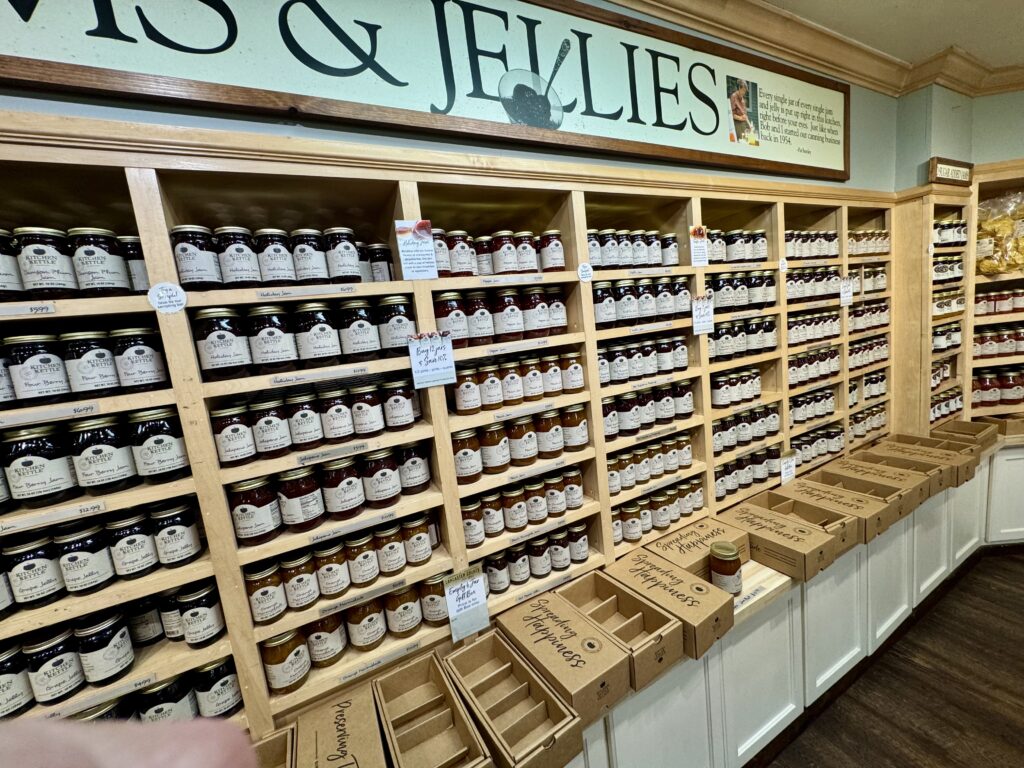
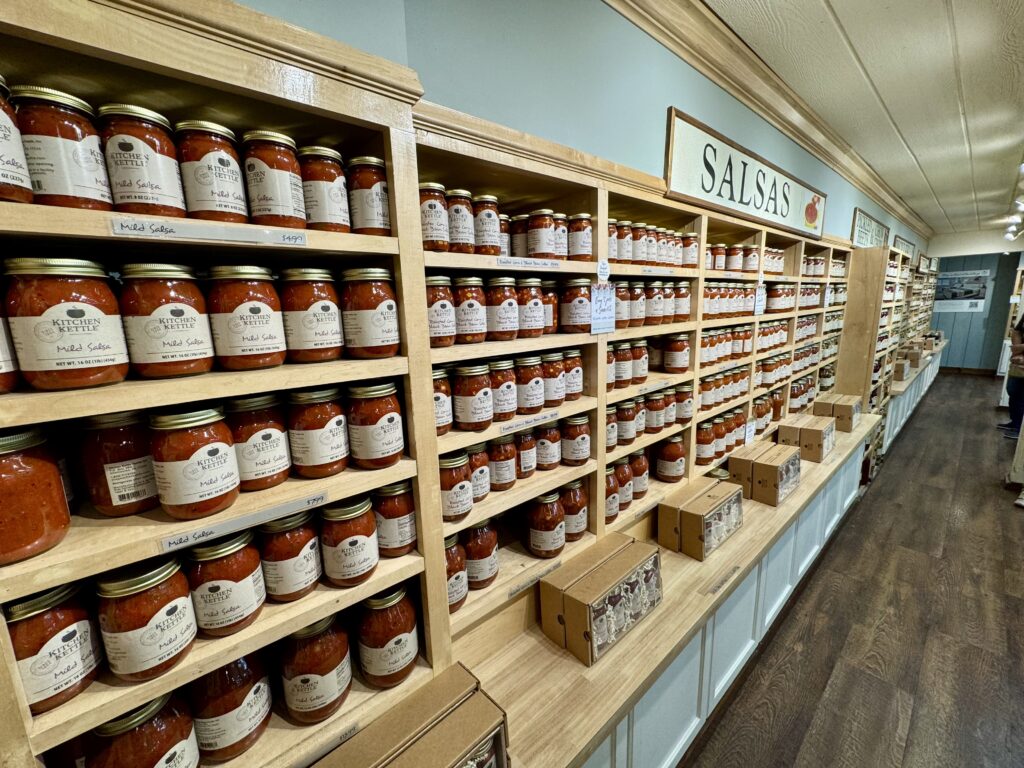
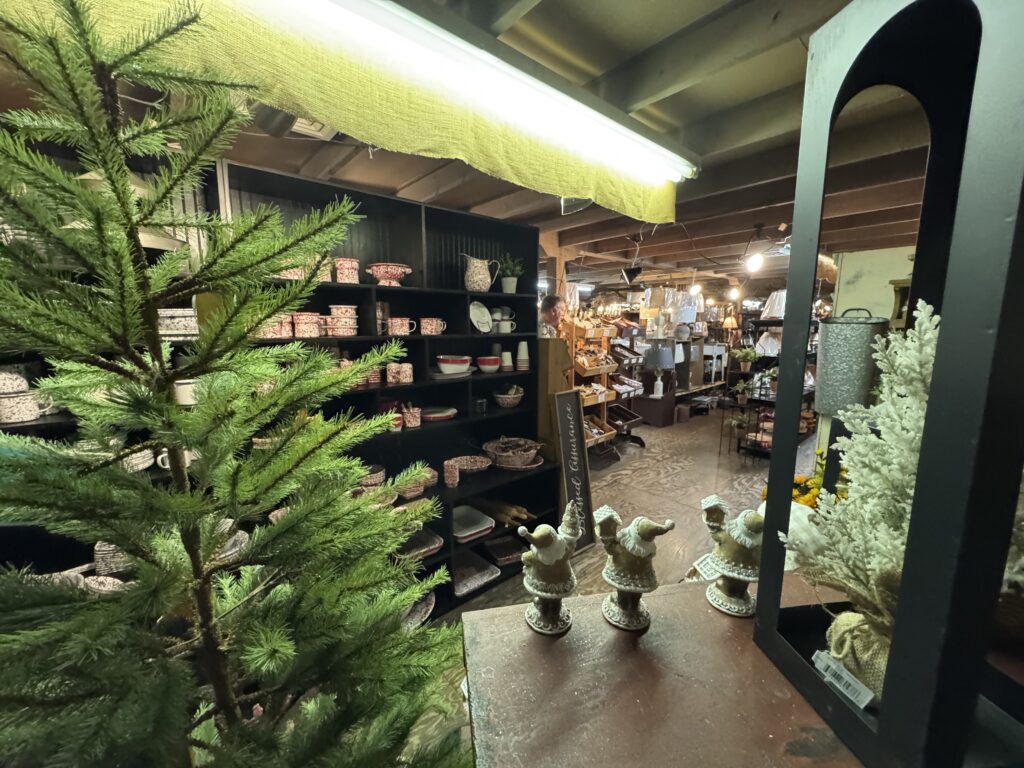
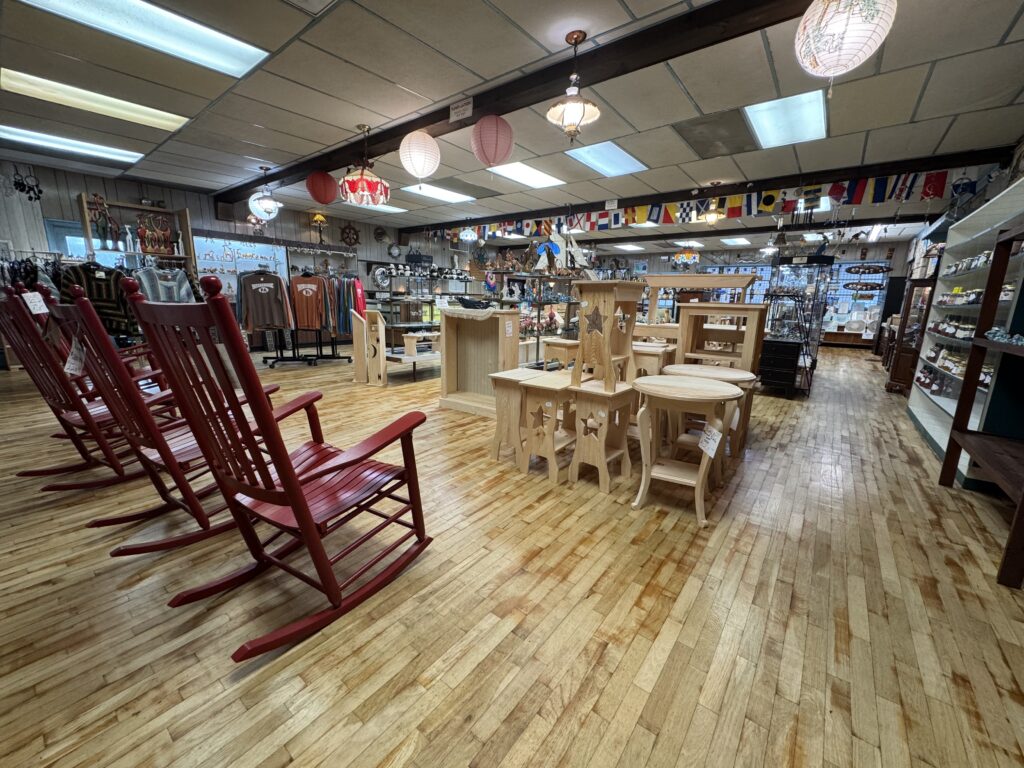
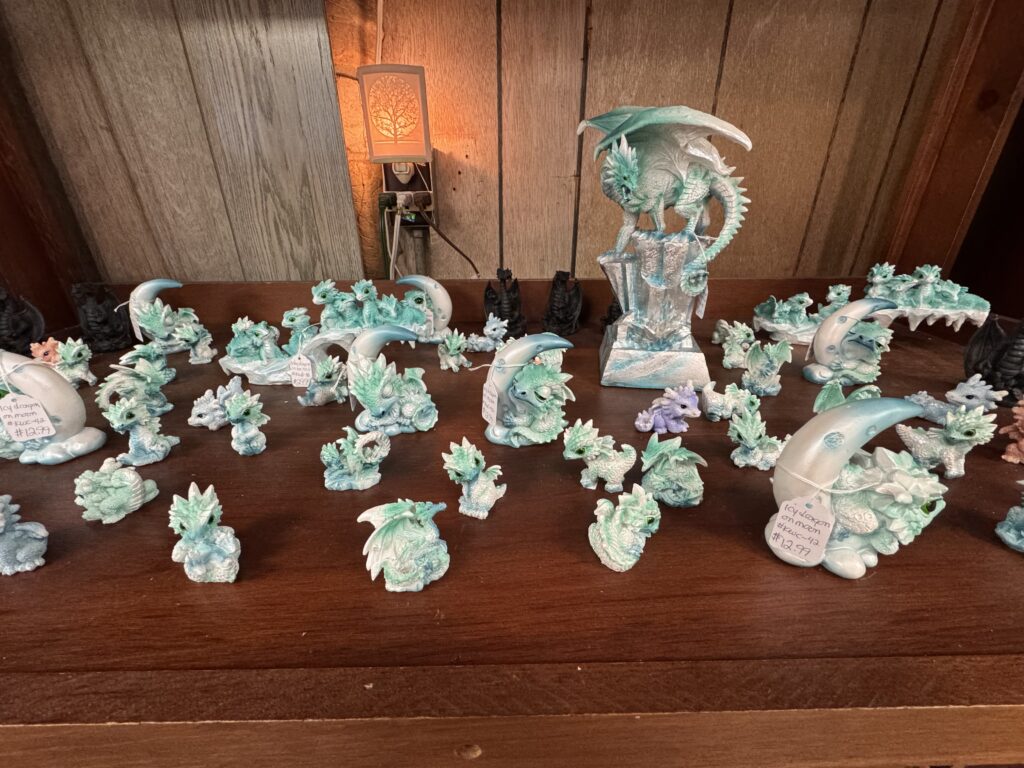
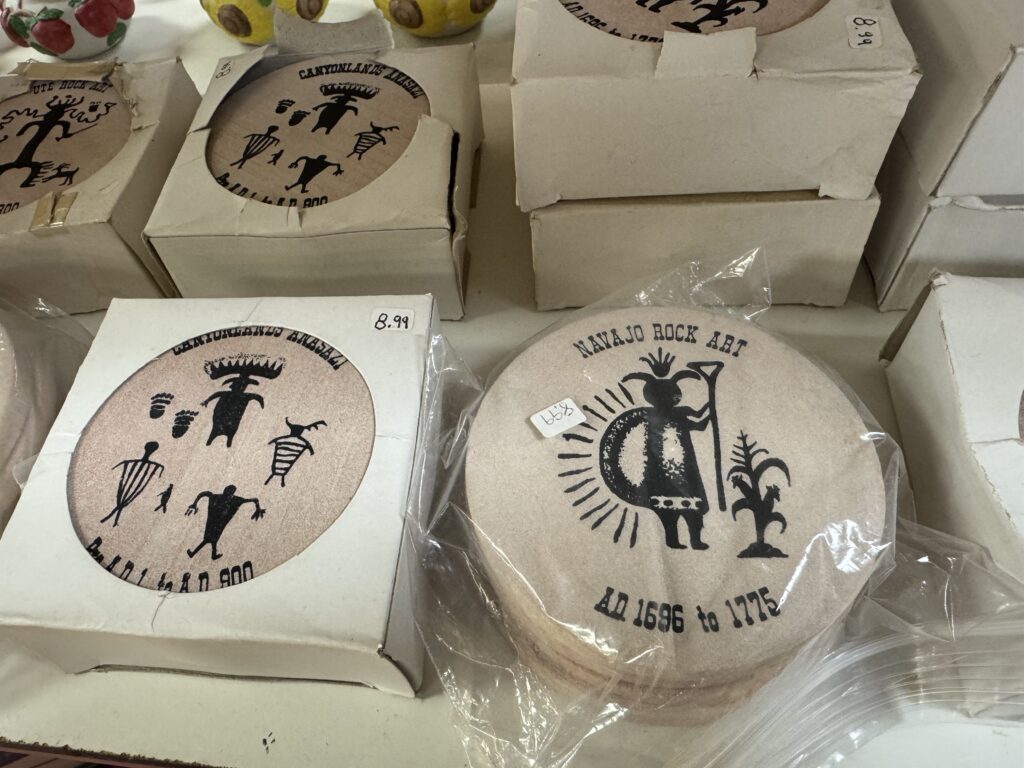
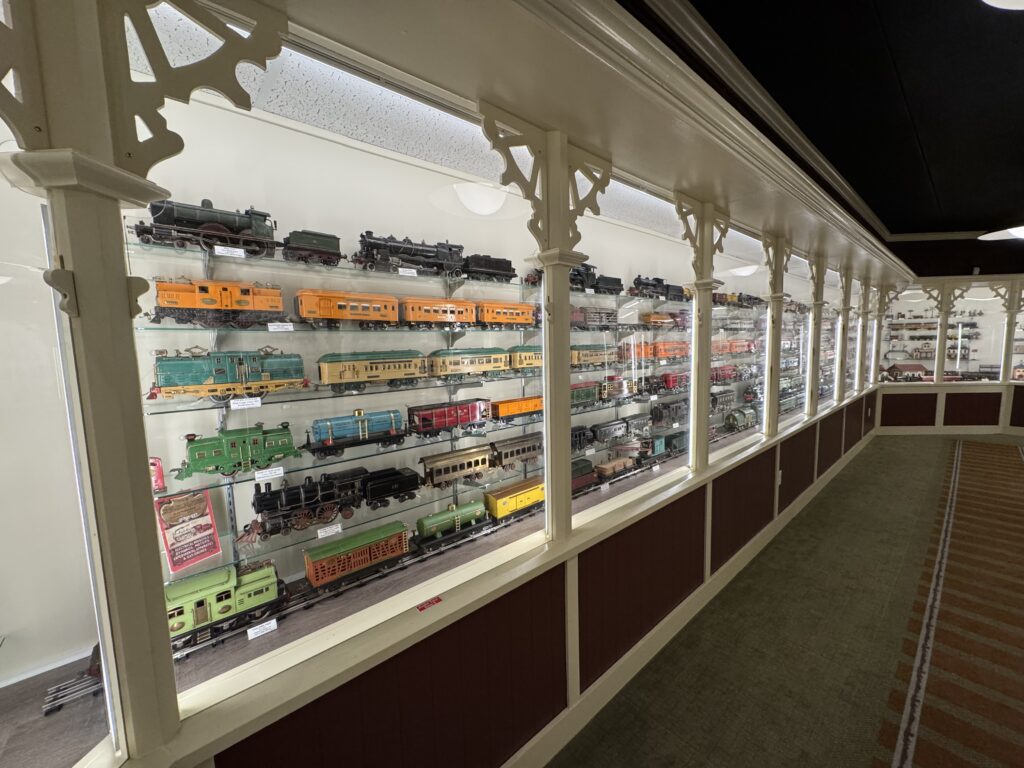
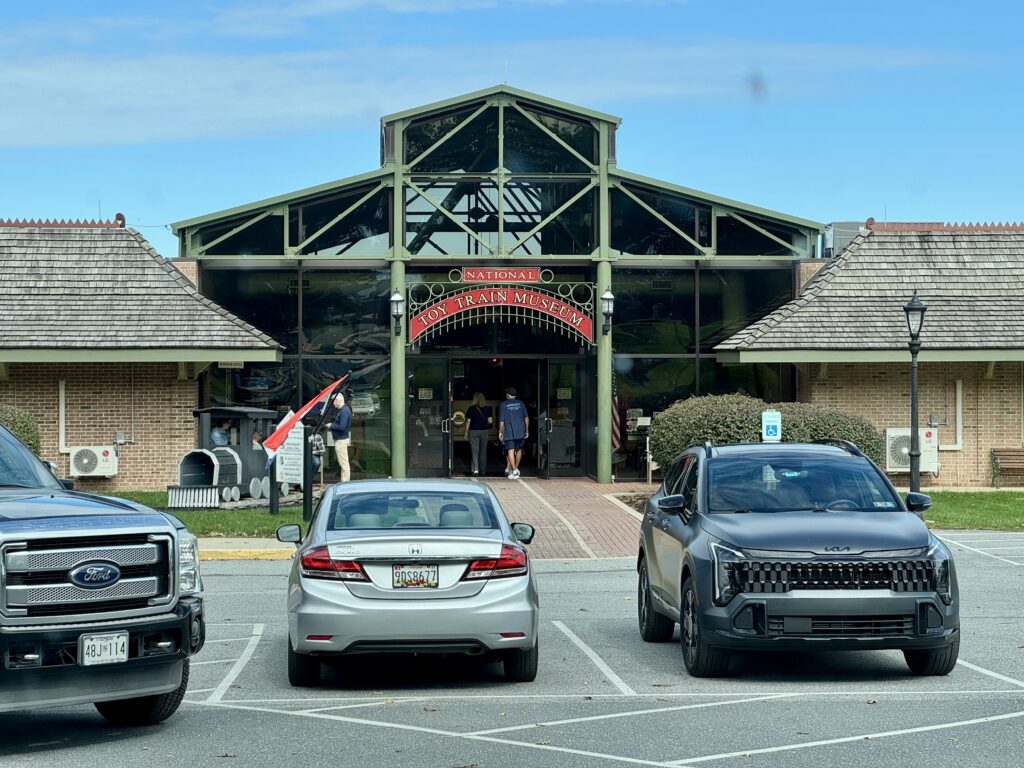
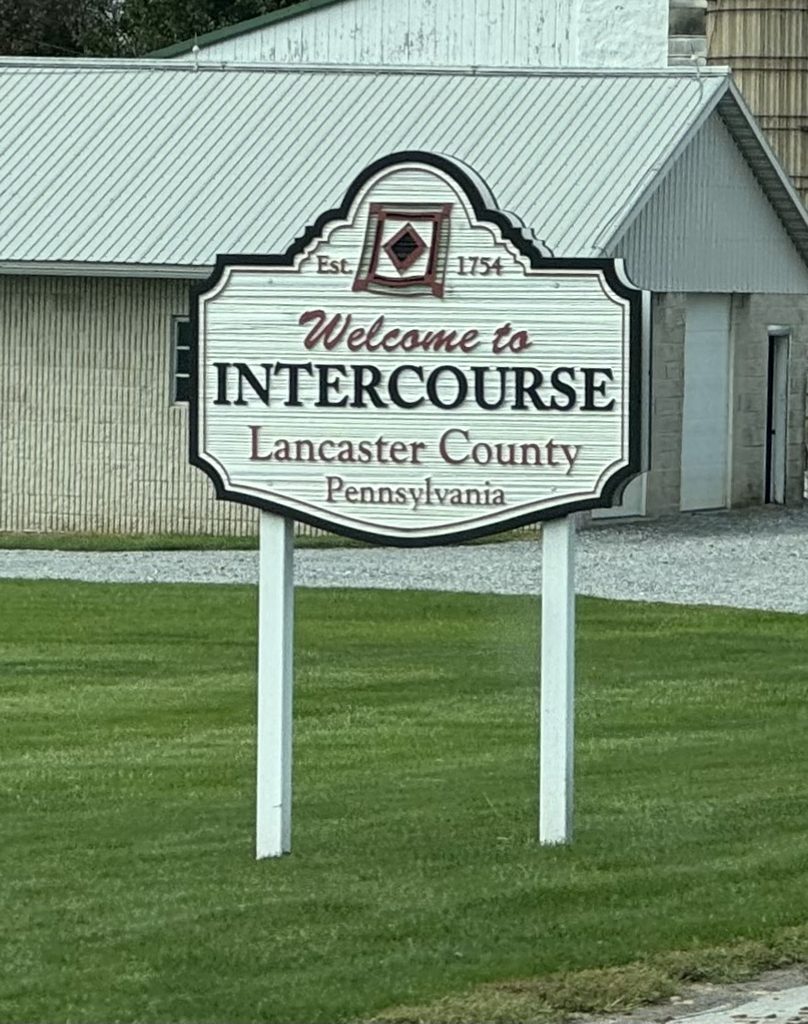
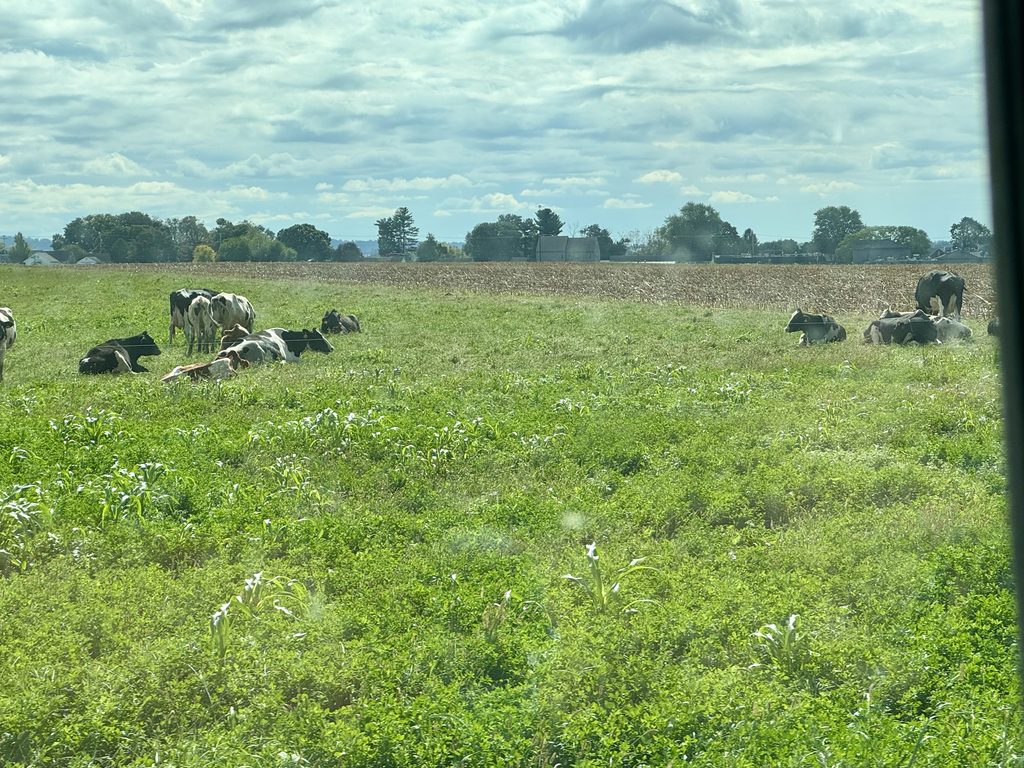
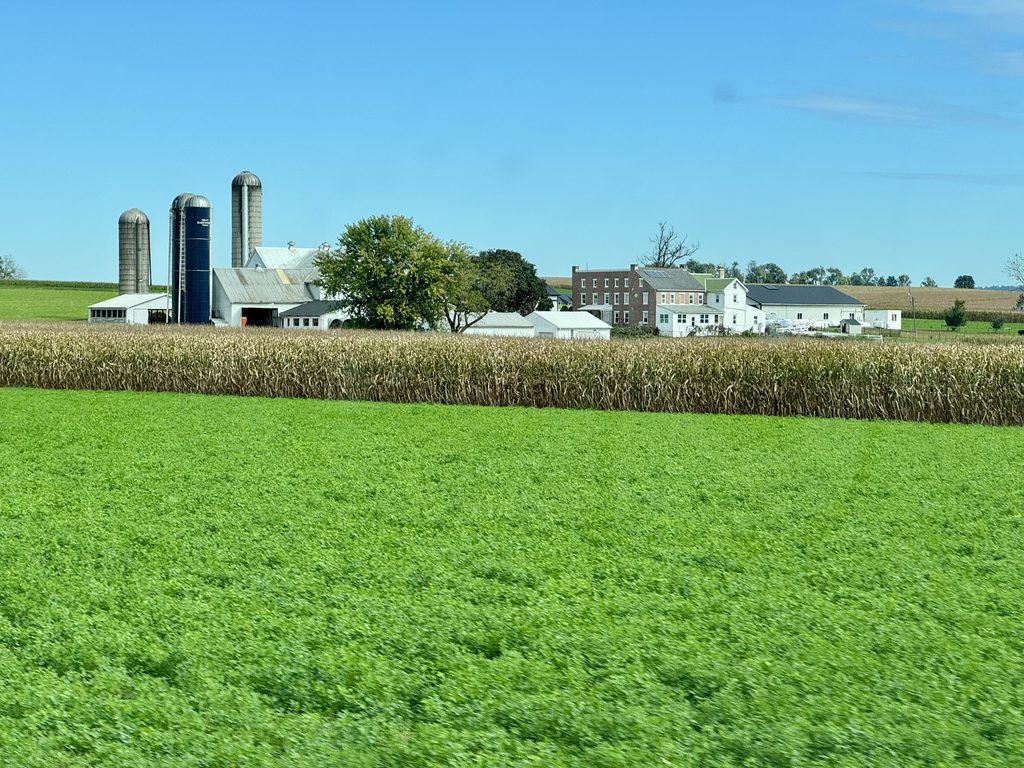
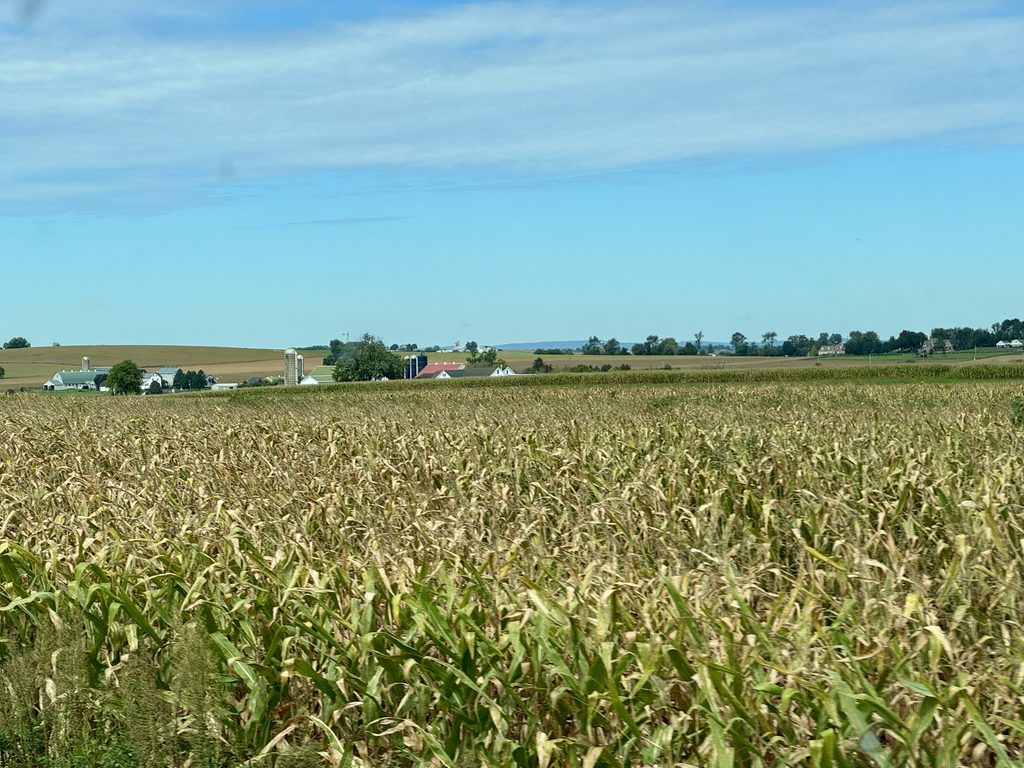
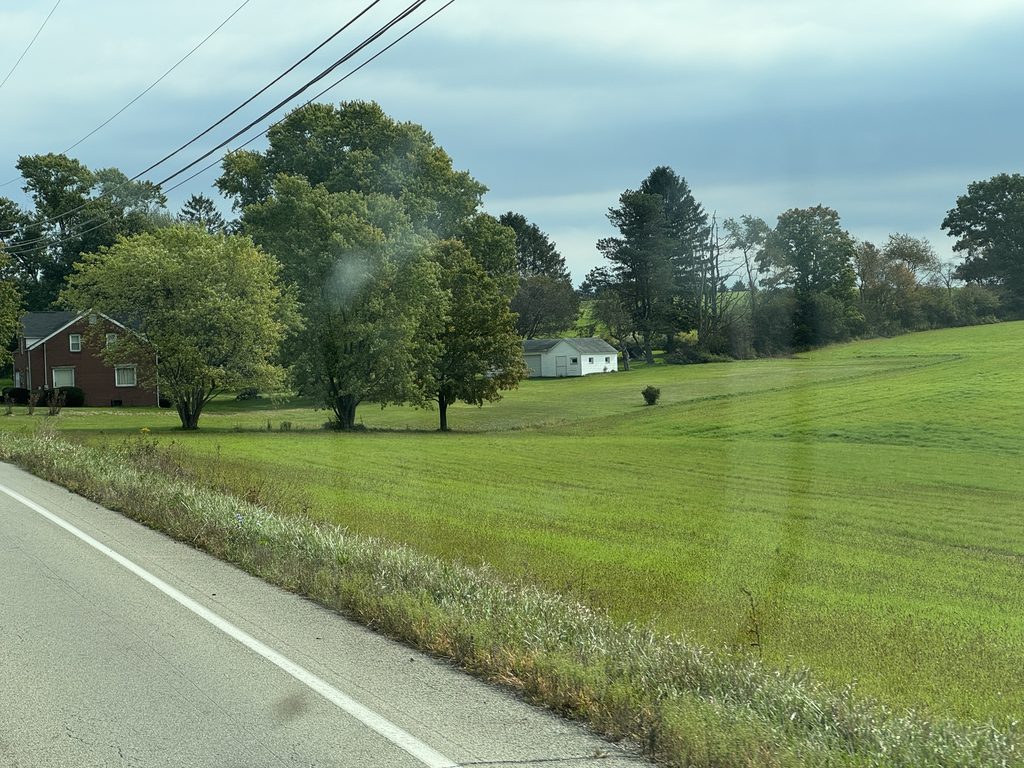
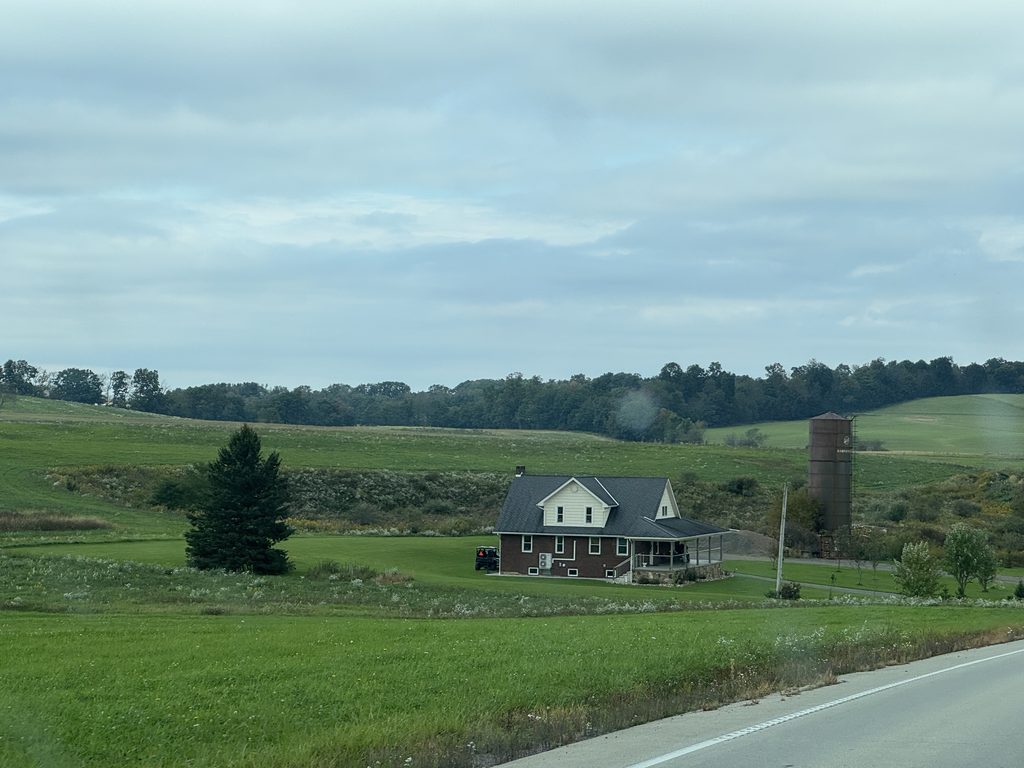
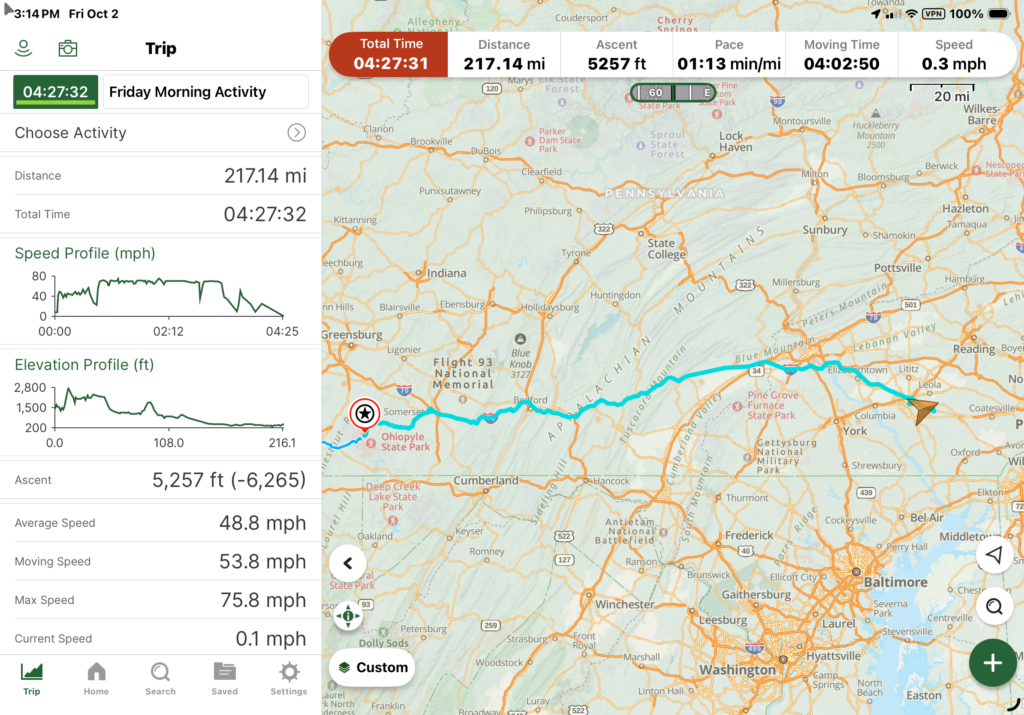
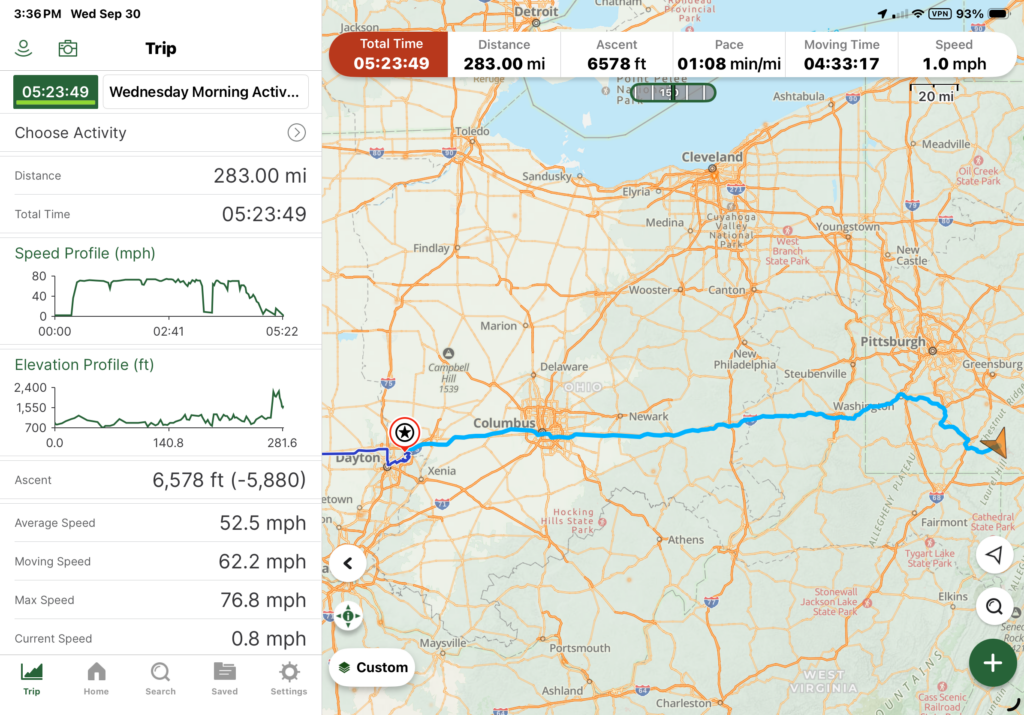
In Lancaster, they feast on a variety of delicacies, like pickled baloney. Whoopie pie is a derivative of the more common (and more tasty) Ho-Ho. Shoo-fly pie is sort of like pecan pie, without the pecans.Pennsylvanians love to compete over the sizes of their barns. This leads to structures that are not proportional to the needs of the agri-business.Amish in their native habitat. Note the buggy slowing the progress of the giant tractors, also operated by Amish. That’s right, the Amish are not averse to using modern machines…as long as they are not in the house.In Lancaster, they adore living in old houses; there are many scattered throughout the towns and villages.Amish country of today is mostly a gigantic shopping mall, filled with useless items that no one on Earth needs. The only exception is the perfectly sized braided rug that lends a home-like atmosphere to my van. And also the cute little jars of jam. Those are definitely necessary.I don’t know about you, but I think it should be unlawful to sell (alleged) Navajo wares a continent away from the actual Navajo.There is such a thing as a National Toy Train Museum! Stuffed full of model trains and huge dioramas with little trains running through them. The only drawback: shrieking children running to and fro with untoward excitement.Pennsylvania is experiencing a extreme shortage of musicians, forcing each of the scarce ones to play several instruments simultaneously. Also, Pennsylvanians will happily humiliate themselves for a buck.Pennsylvania has strict rules governing where certain activities can take place. This is to ensure that the appropriate procedures are followed in accordance with the statutes and Scripture.Pennsylvania has an abundance of wasted space, making it a prime candidate for infill development.The way there.
Frank Wright enjoyed sketching houses, some of which were actually built! This is one of those.
There was a time in the 1920s and 1930s that a family named Kaufmann amassed a great fortune by gouging customers at their Pittsburgh, Pennsylvania, department store.
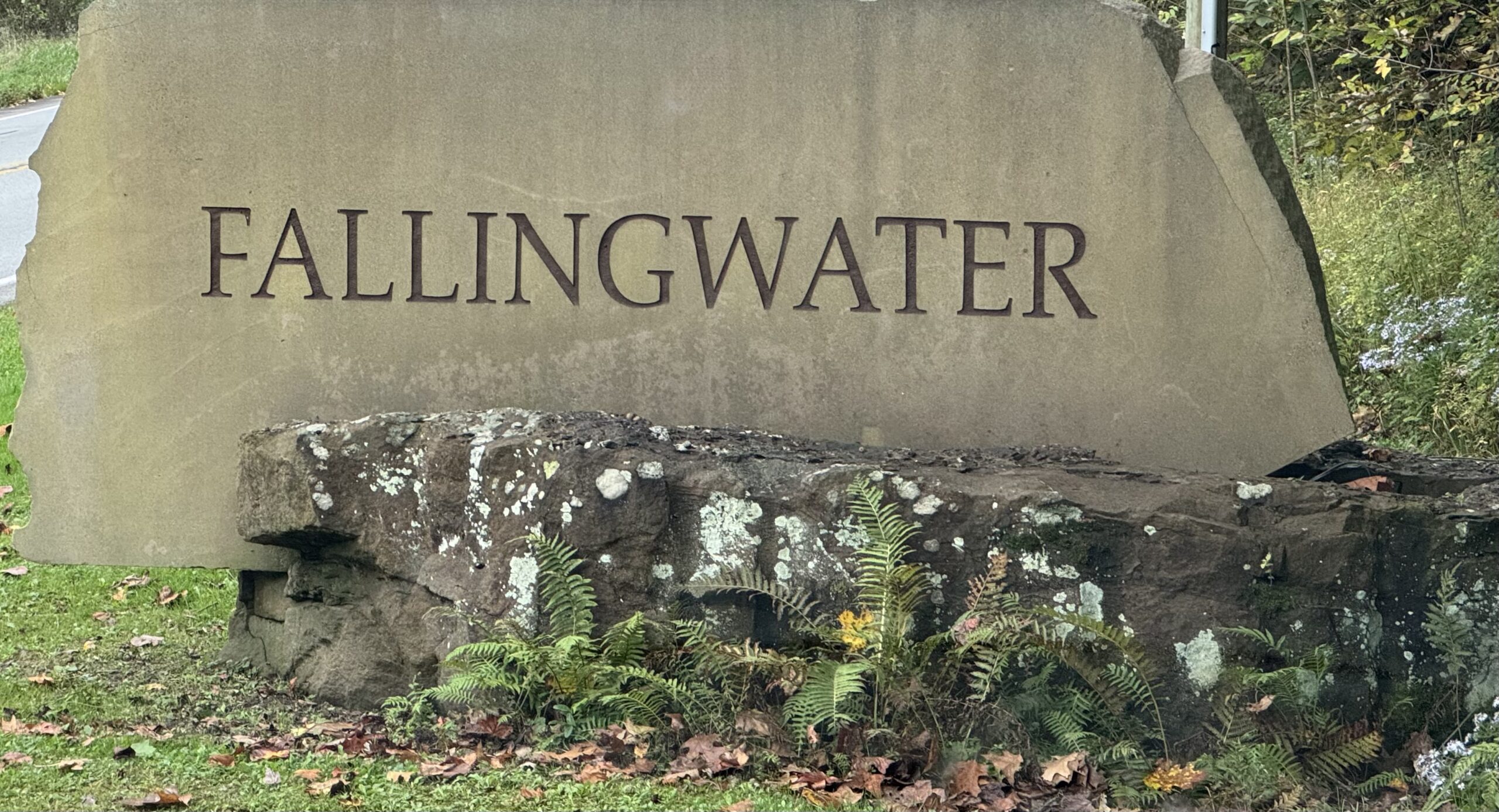
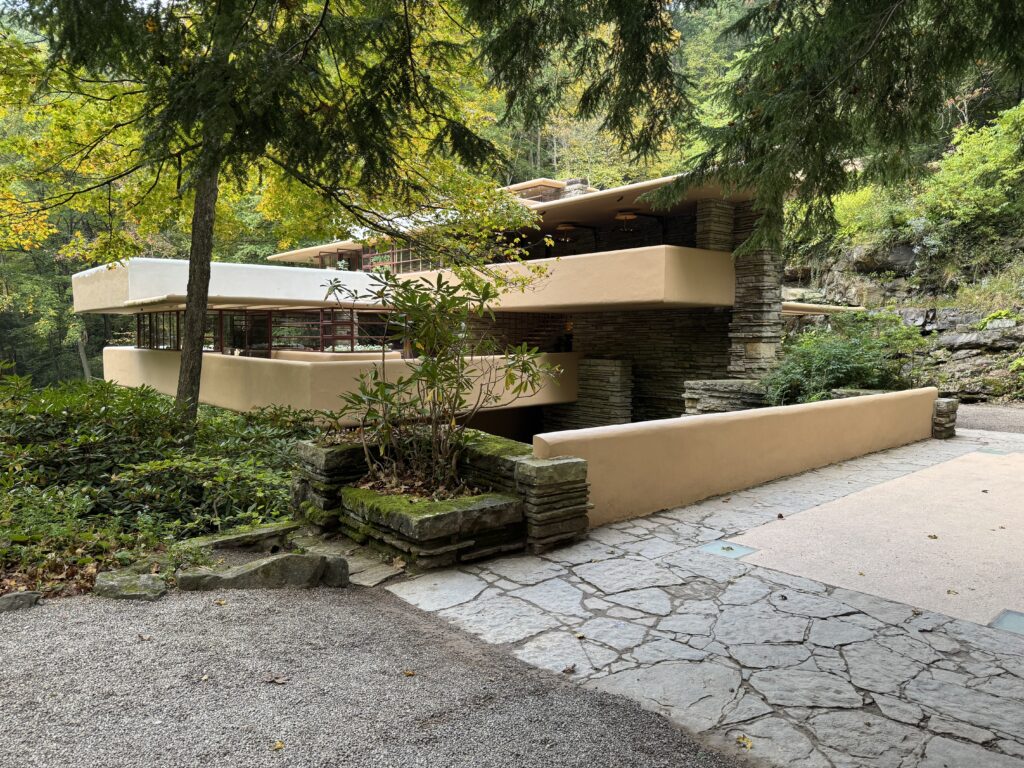
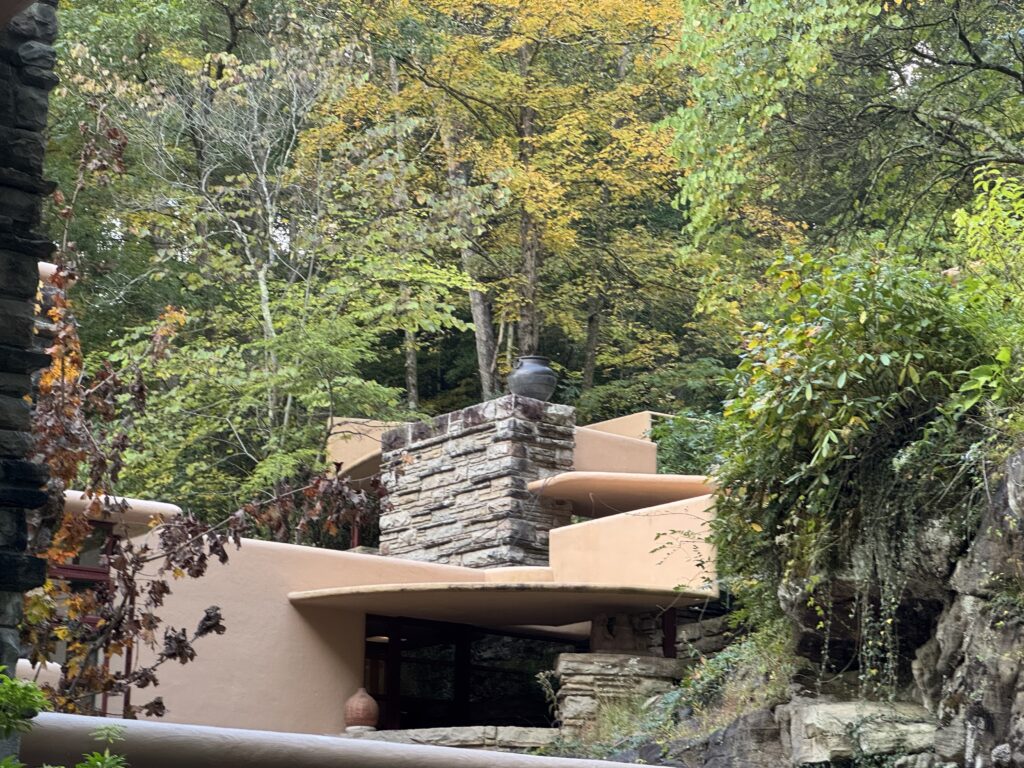
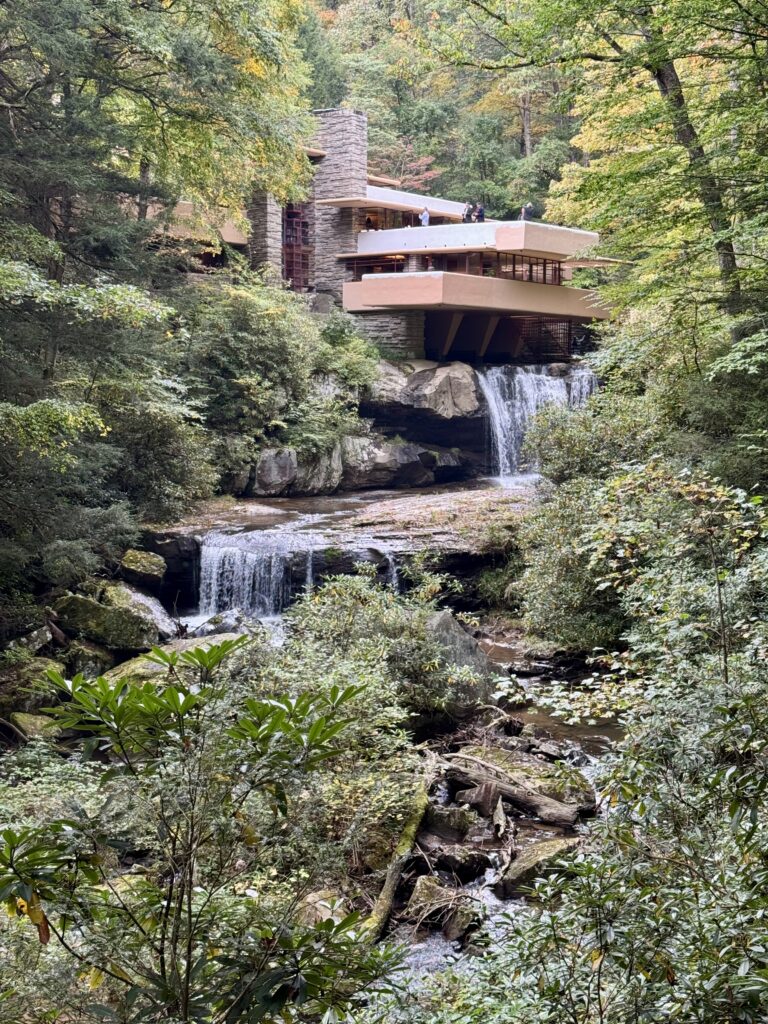
Rich people, of course, need weekend cabins in the remote woods to rest and think of new ways to fleece their customers. So the Kaufmanns hired Frank to design their cabin, which they named Fallingwater because it hovers over an actual waterfall.
The house was built in mid-Depression for a cost of around $150,000. For comparison, the guide informed me that an upper-class 4-bedroom brick house in Pittsburgh cost, at the time, around $5,000. That’s right, their weekend cabin was 30 times the cost of a normal wealthy person’s house. So great was the Kaufmanns’ fortune, that they also had vacation homes in Palm Springs, Greece and elsewhere.
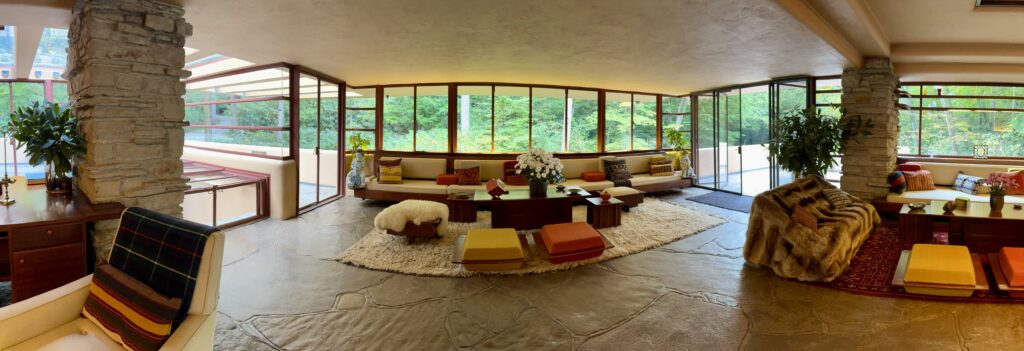
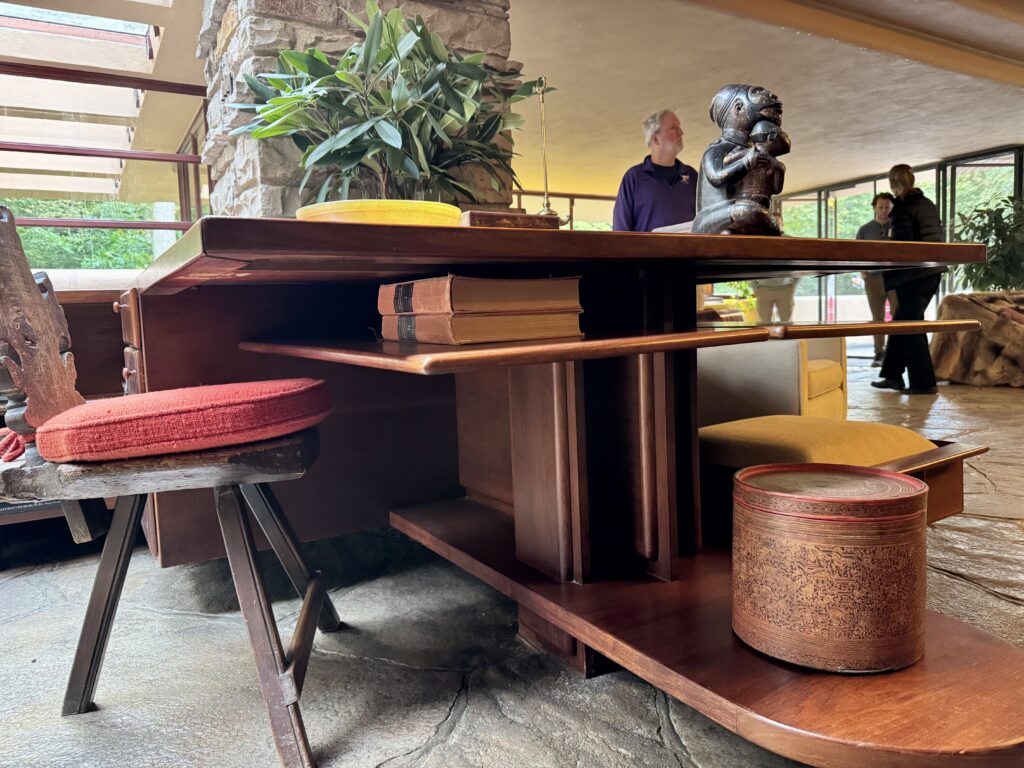
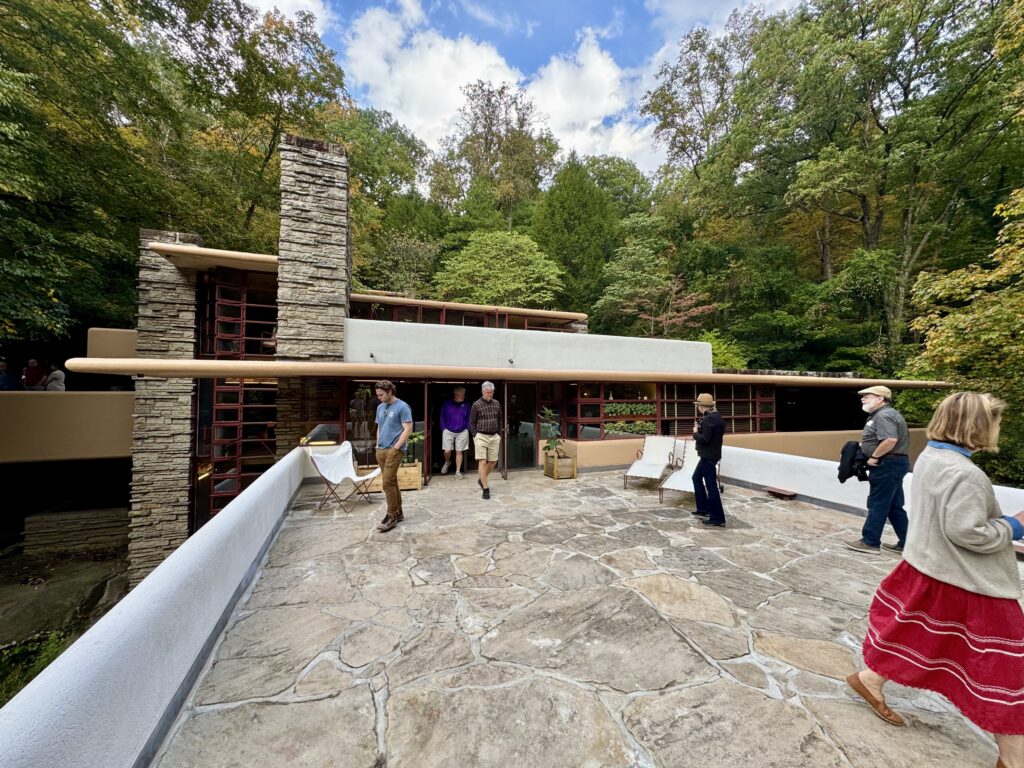
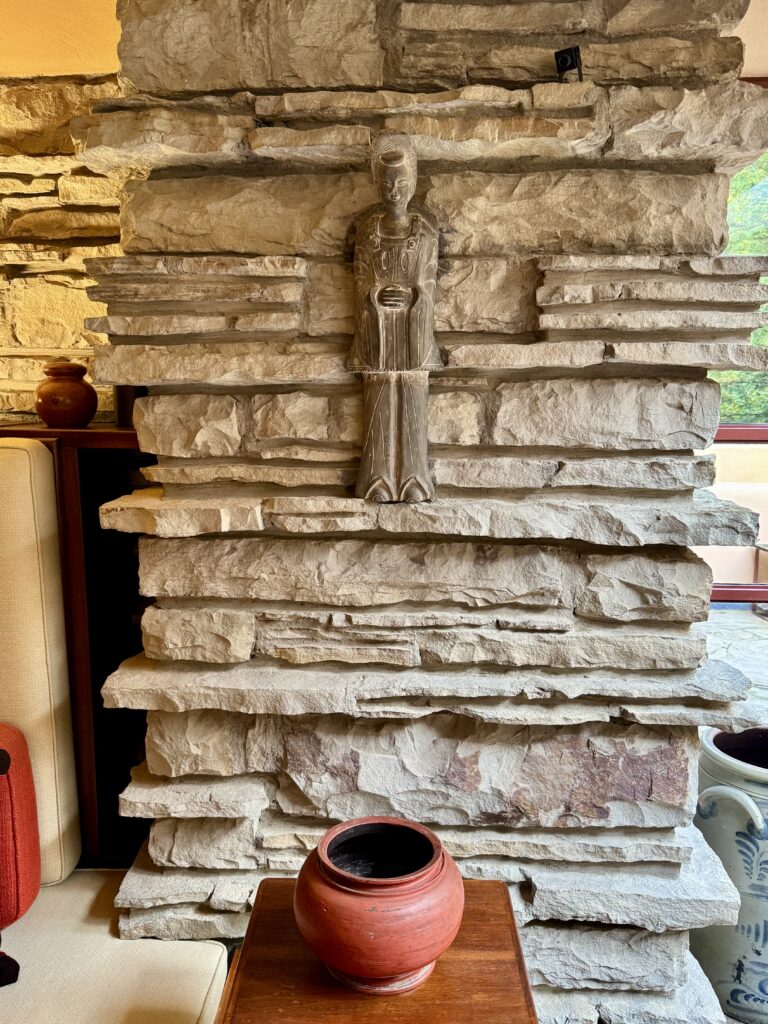
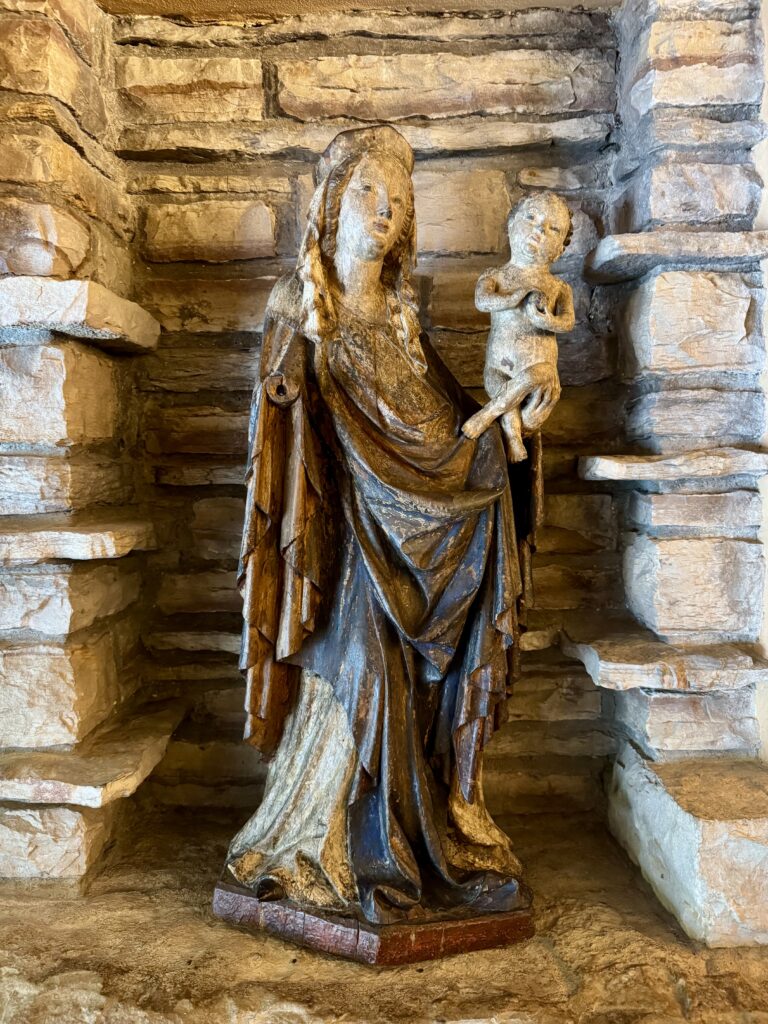
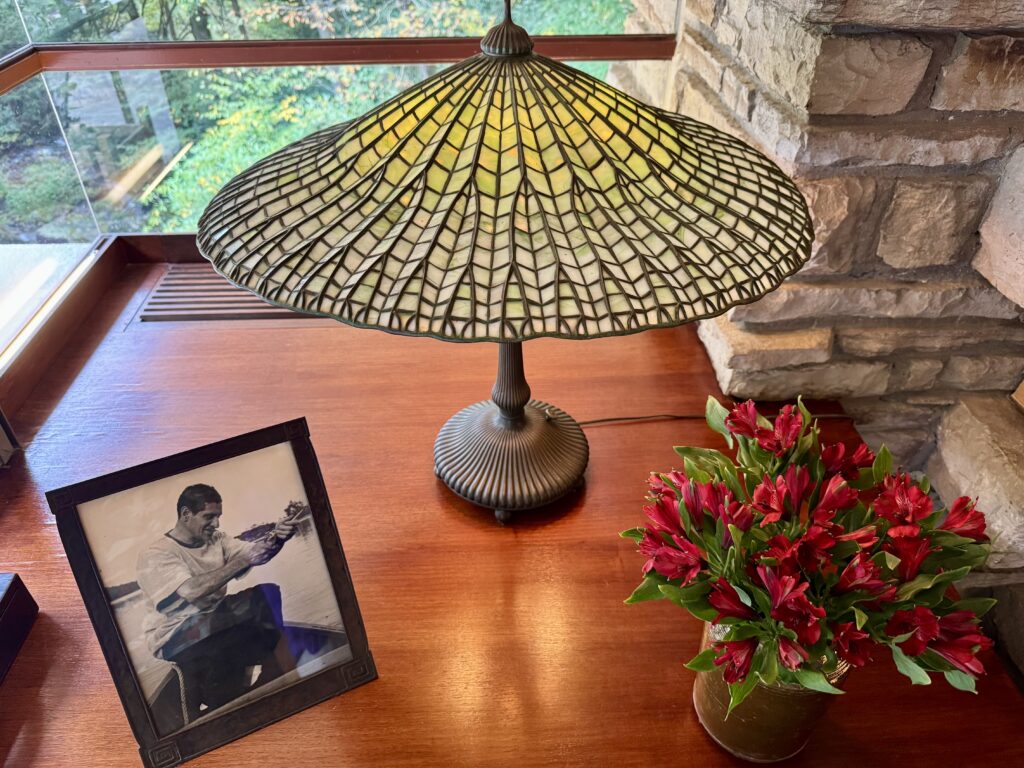
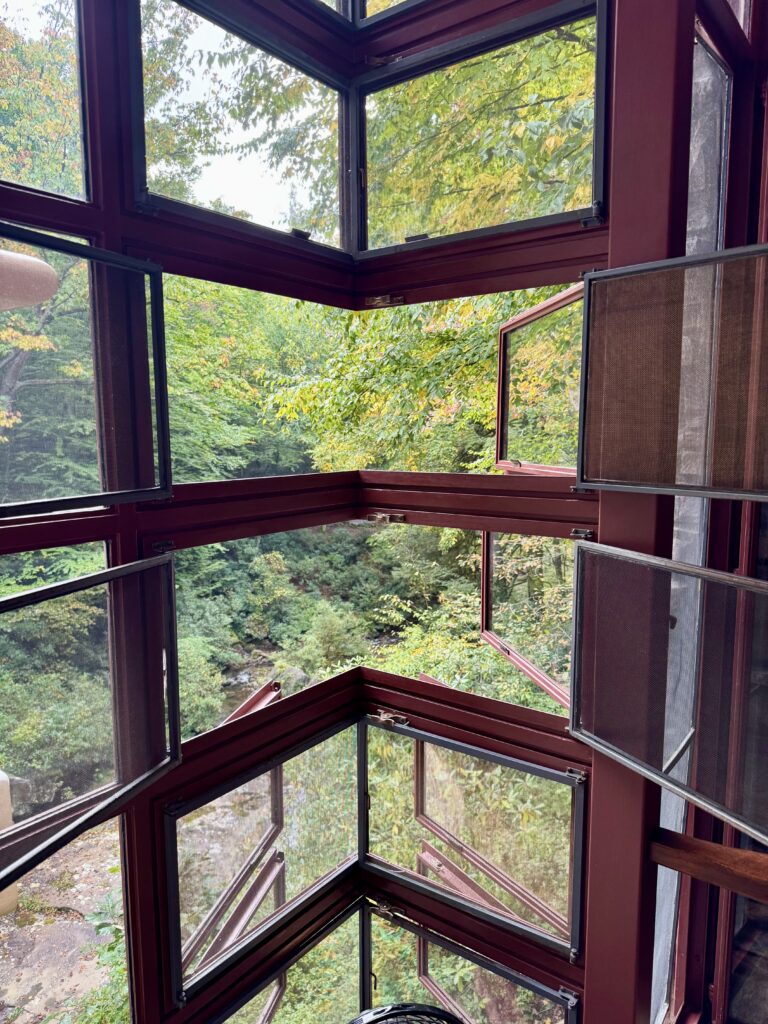
This is the view the Kaufmanns would have seen as their chauffeur drove them to the cabin.Although well known to modern people, Frank’s open floor plan was considered innovative at the time.Whoops! A construction worker left a clay pot atop the chimney.A nifty desk with cantilevered shelves echoing the design of the house itself.Expansive terraces are a major feature of the cabin.Rich people can have houses designed around their favorite knick-knacks.This Madonna and Child dates from 1420.A nice Tiffany lamp lights the bedroom desk.Clever design and engineering allow this window to omit the support in the corner. This is one of Frank’s most significant contributions to the field of house design.The view from the foot of the waterfall.
And that’s not a typo…it really is called Kentuck Knob. According to legend, a colonizer left New York for Kentucky to wrest land from the native Americans. But he got to western Pennsylvania, loved the place and stayed. Apparently he decided that, if he called a piece of Pennsylvania Kentucky, he could declare victory. Somehow or another, those dwelling therein lost the “y”.
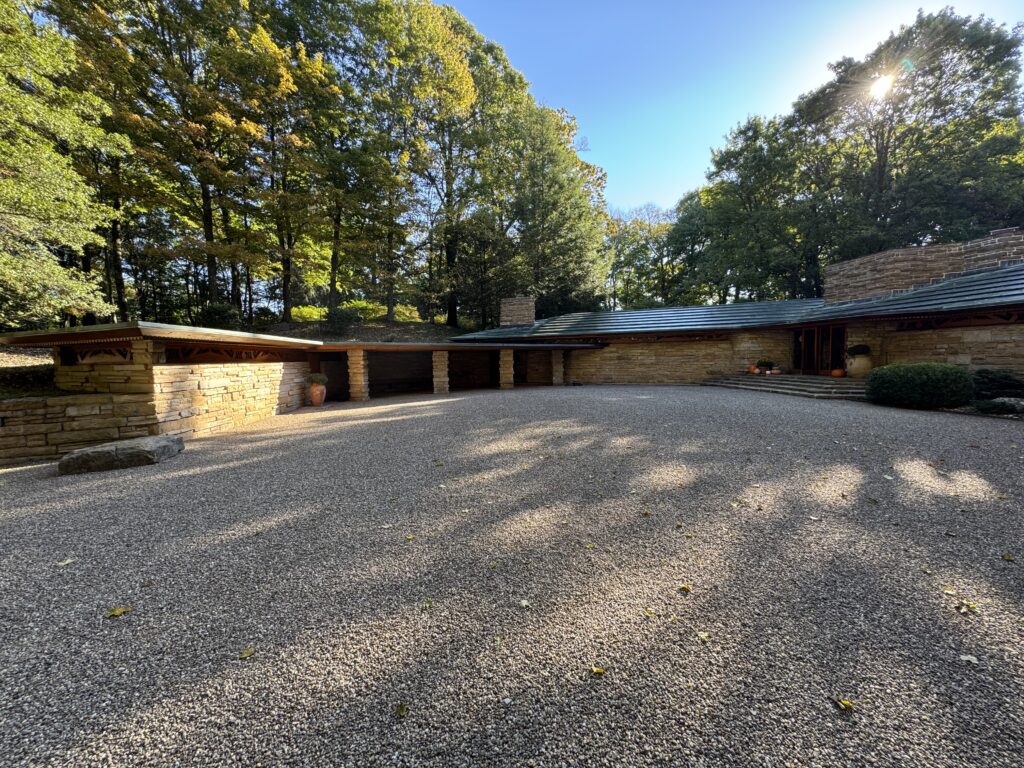
There was a family, the Hagans, who became rich in western Pennsylvania by selling ice cream. They were impressed by a nearby house, Fallingwater, learned that the architect was Frank Wright and hired him to design a house. Frank was well known for designing with nature and designed the house to integrate with its setting. The result was impressive with an almost-excessive attention to detail.
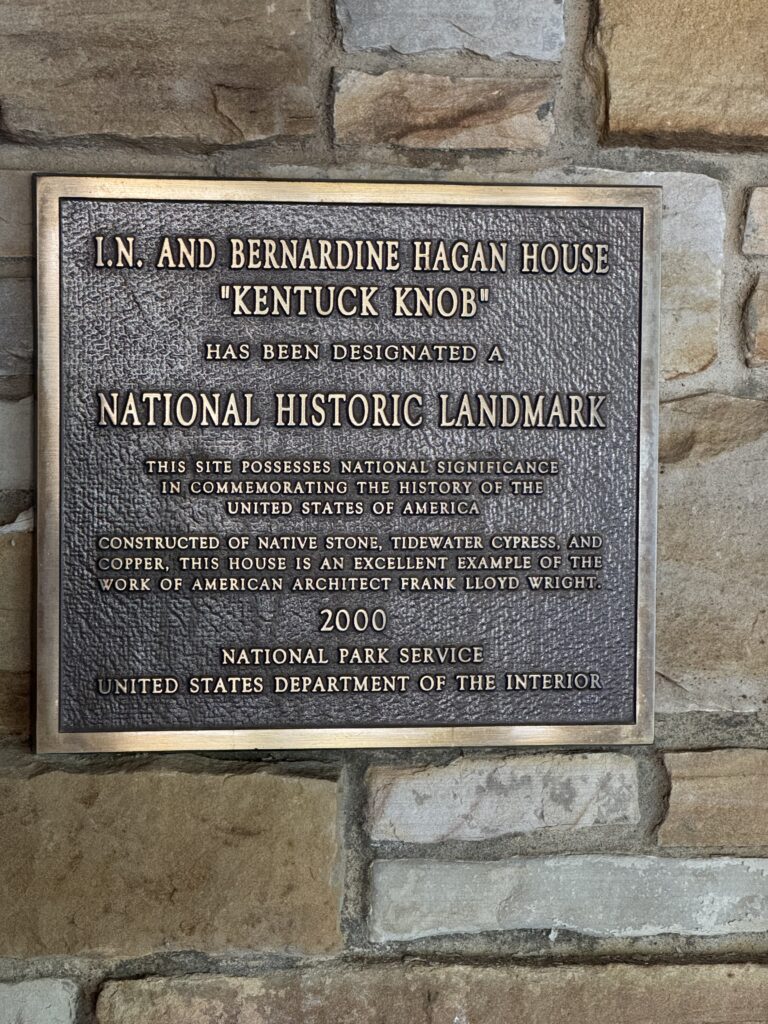
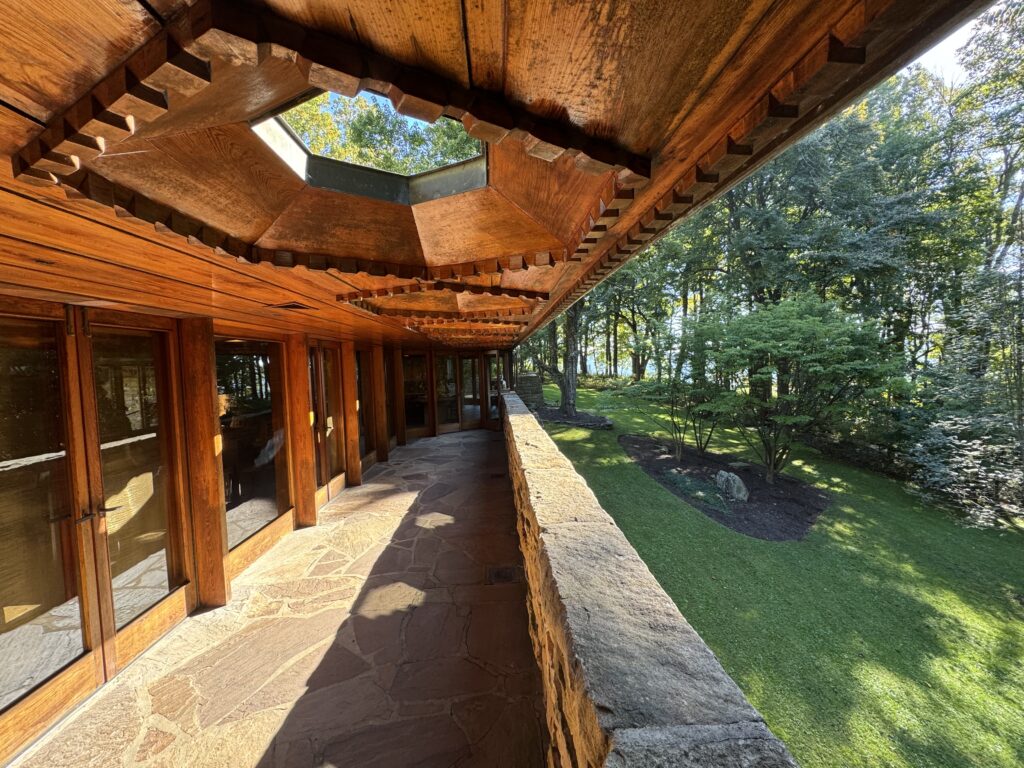
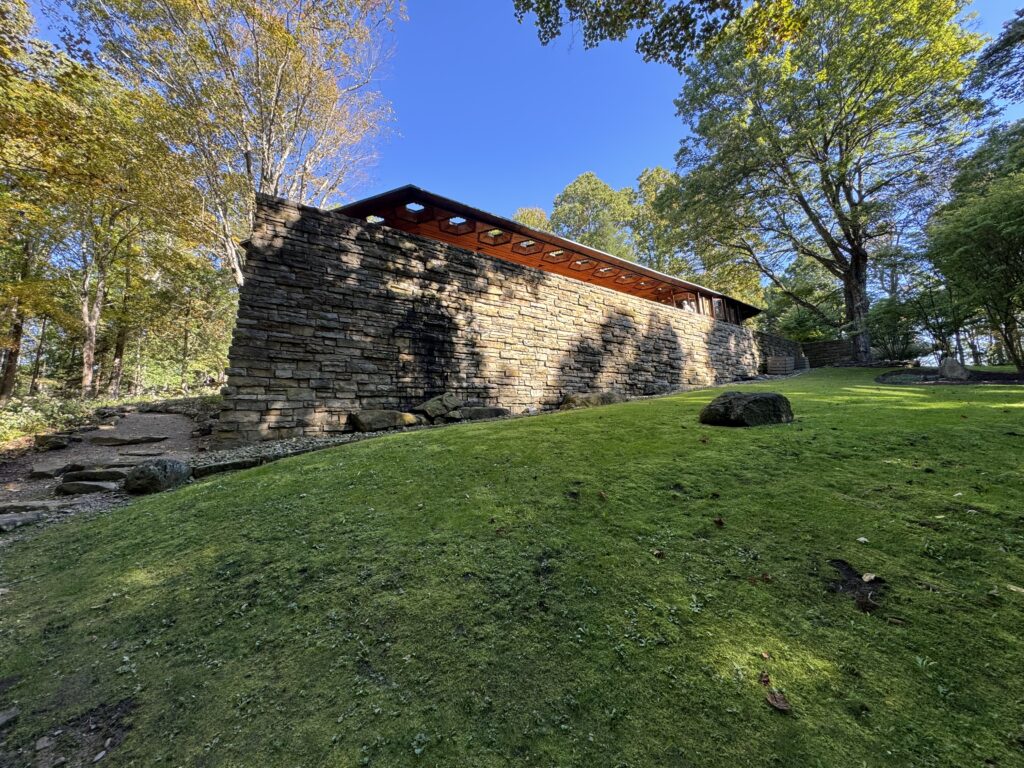
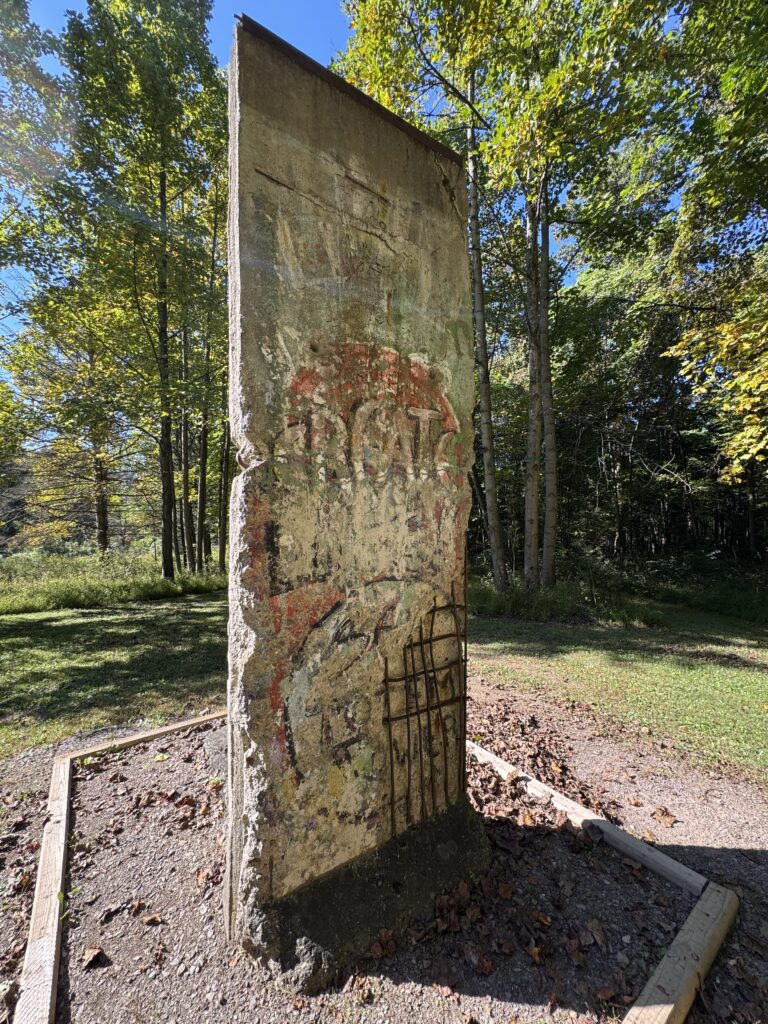
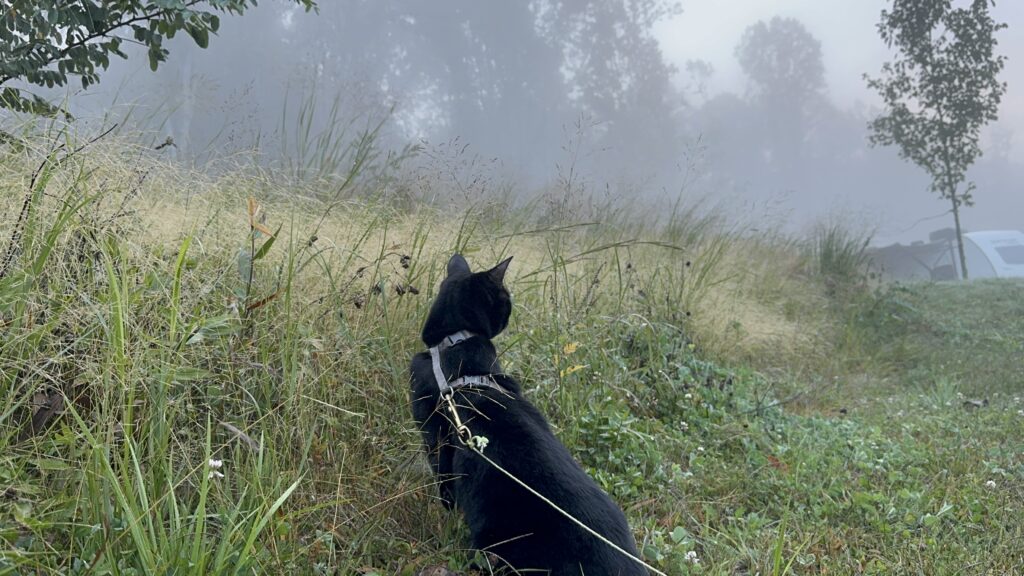
You can tell that the house is important, because only important houses get brass plaques.The floor plan is based on a hexagonal grid of equilateral triangles which, when overlapped, form parallelograms. This design language is carried throughout the house, as shown in this hexagonal skylight.The back side of the house is embedded in the hillside. This side rises like a great prow.The current owner of Kentuck Knob is an unknown Englishman named Baron Palumbo (not kidding). He is a collector of practically anything, including this chunk of the Berlin Wall. He has numerous other sculptures, which he has scattered throughout the grounds.Xena, the Warrior Princess, prowls the early morning fog.